


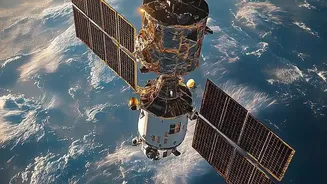
The New Satellite Gold Rush
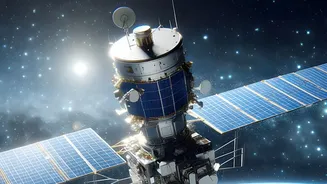
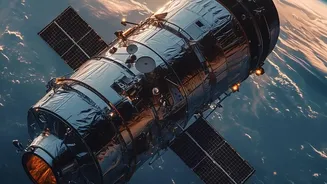
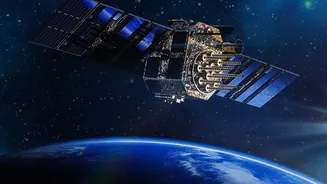
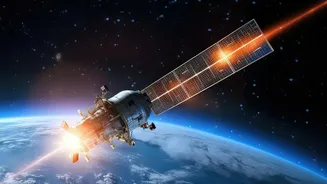
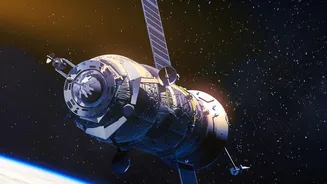
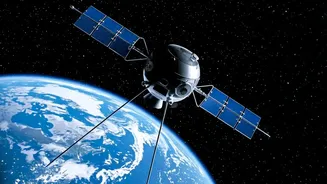
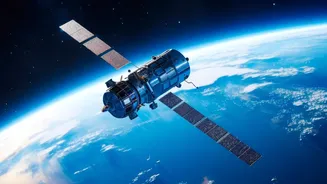
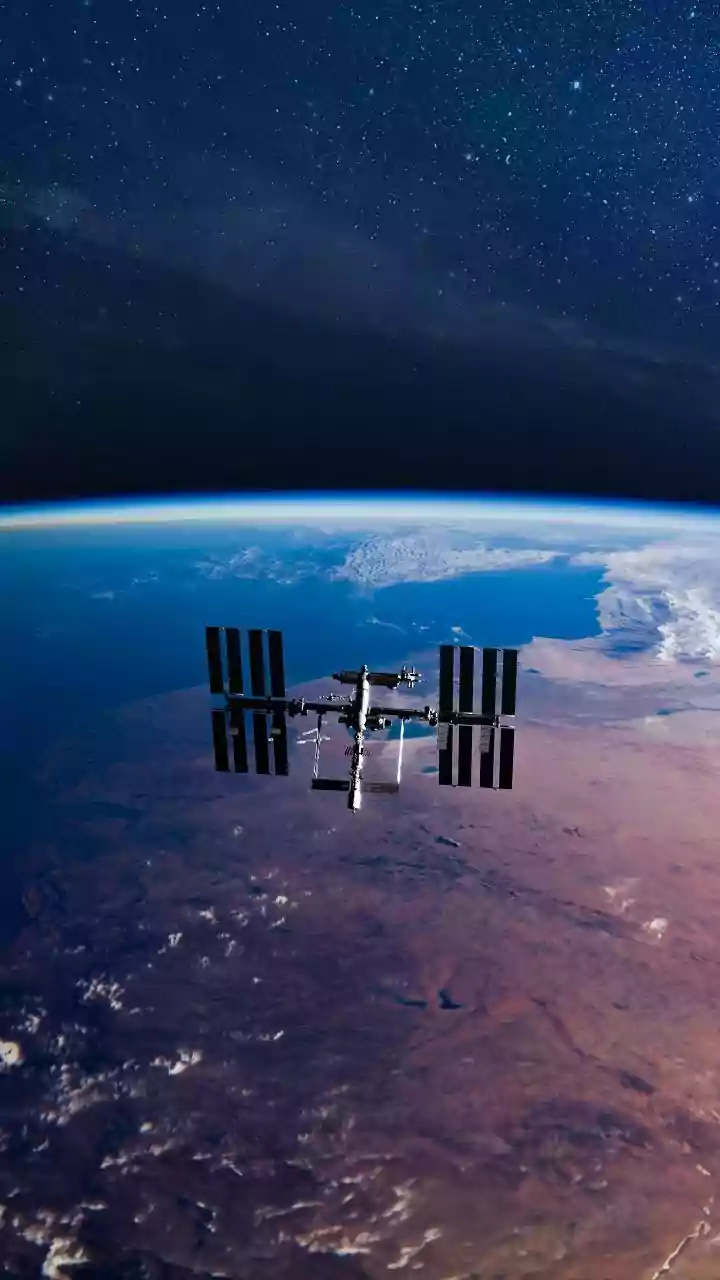
The dream of global, high-speed internet has fueled a massive expansion in low Earth orbit (LEO). As of late 2026, there are nearly 17,000 active satellites orbiting Earth, a number that has grown by almost 30% in just one year. The vast majority of this
growth is driven by commercial "mega-constellations." Companies like SpaceX with its Starlink network, which already accounts for two-thirds of all active satellites, are leading the charge. They are joined by other major players like the Eutelsat OneWeb group, and Amazon's Project Kuiper, with China also rapidly expanding its own constellations. These companies launch satellites in large batches, sometimes multiple times a week, to create a web of connectivity that can reach even the most remote corners of the globe.
A Crowded Highway with No Rules
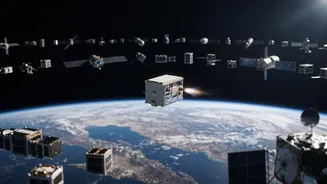
Low Earth orbit, the region up to 2,000 kilometers in altitude, is becoming dangerously congested. Unlike highways on Earth, there is no global air traffic control for space. The international laws that govern space, like the 1967 Outer Space Treaty, were written in an era of a few state actors, not thousands of commercial satellites. These treaties lack specific rules for traffic management, debris mitigation, or the sheer volume of a mega-constellation. While national agencies like the U.S. Federal Communications Commission (FCC) license launches, the framework is fragmented. This regulatory gap means that tens of thousands of objects, from active satellites to defunct ones and spent rocket bodies, are all sharing the same orbital highways with no universally enforced rules of the road.
The Ultimate Risk: Kessler Syndrome
The greatest fear is a scenario known as the Kessler Syndrome, proposed by NASA scientist Donald J. Kessler in 1978. It describes a runaway chain reaction where the density of objects in orbit becomes so high that collisions become inevitable. A single collision—for instance, between two satellites—would generate thousands of pieces of debris. These fragments, traveling at speeds over 28,000 kilometers per hour, would then be capable of destroying other satellites, creating even more debris. This cascading effect could eventually render certain orbits unusable for generations, trapping humanity on Earth by creating an impassable barrier of high-velocity shrapnel. Experts warn that the 2009 collision between an Iridium satellite and a defunct Russian Cosmos satellite, which created around 2,000 pieces of trackable debris, was a real-world example of this process beginning.
An Accident Waiting to Happen?
The risk is not theoretical. According to some analyses, satellites in LEO mega-constellations experience a "close approach" (passing within one kilometer of each other) every 22 seconds. To prevent disaster, a single Starlink satellite may perform dozens of automated collision avoidance maneuvers each year. However, these systems rely on having control. A recent European Space Agency report warned that the number of orbital objects is "skyrocketing in a runaway effect." Researchers have even created a metric called the "CRASH Clock," which calculates how long it would take for a catastrophic collision to occur if all satellites lost their ability to maneuver simultaneously, perhaps due to a major solar storm. As of mid-2026, that clock had shrunk from 164 days in 2018 to just 2.5 days.
Searching for a Solution
Addressing the problem requires a two-pronged approach: mitigation and management. The first step is preventing the creation of new debris by ensuring satellites can safely de-orbit at the end of their lives. A recent ESA report noted with concern that not enough satellites are being removed from congested orbits. The second step is actively managing the traffic that's already there. This is the field of Space Traffic Management (STM). Innovations in this area include better ground-based and space-based tracking systems, using AI to predict and automate collision avoidance, and even developing robotic missions to actively remove the most dangerous pieces of existing debris. Organizations like NASA and private companies are developing open-architecture systems to create a common operating picture, allowing different operators to coordinate and ensure safety.