




The Architect of the AI Gold Rush
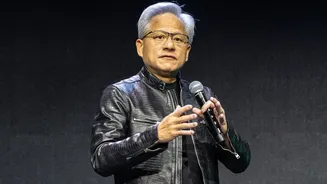
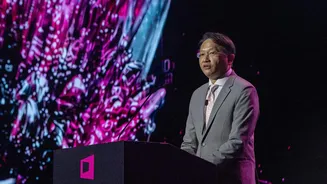
To understand Nvidia, you have to understand Jensen Huang. The co-founder, who led the company since its inception in 1993, is more than a CEO; he is its chief product visionary and strategist. Huang famously bet the company's future not on the graphics
chips that made it famous among gamers, but on a new form of 'accelerated computing'. This pivot, which began long before the current AI boom, repurposed Graphics Processing Units (GPUs) for general-purpose calculations, a move that would eventually position Nvidia as the indispensable supplier for the artificial intelligence revolution. His most consequential decision was the 2006 introduction of CUDA, a software platform that allows developers to harness the parallel processing power of Nvidia's GPUs. This created a powerful software 'moat' around Nvidia's hardware, locking in developers and making it incredibly difficult for rivals to compete on chips alone. Analysts note that Huang was not just the strategist but the beating heart of operations, personally managing customer relationships and product direction.
An Ambitious and Uninterrupted Roadmap
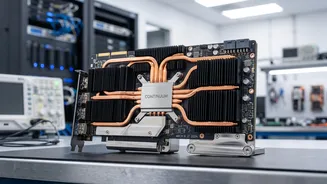
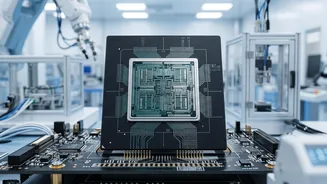
Even with its founder's exit, Nvidia's leadership insists the company's aggressive technology roadmap remains firmly on track. This plan is built on a rapid, one-year cadence for releasing new, more powerful chips. Following the successful Blackwell and Blackwell Ultra GPUs, the company has the Vera Rubin platform ramping up for production and the even more powerful Rubin Ultra slated for 2027. This relentless pace is designed to meet the voracious appetite for computational power from hyperscale data centers, which are expected to represent a trillion-dollar market by 2028. Beyond just the chips, the roadmap encompasses a full-stack solution, including high-speed networking switches and a vast collection of software libraries known as CUDA-X. These components work together to create what Nvidia calls 'AI factories'—integrated systems of hardware and software designed for peak performance. Interim leadership has reassured employees and the market that engineering schedules are locked in for years and that massive, long-term purchase commitments for components like memory underscore that the operational engine is not dependent on a single executive.
The 'Key Person' Risk Becomes Real
Wall Street and Silicon Valley have long been aware of Nvidia's 'key person risk'—the immense dependence on its singular founder. Huang's sudden departure makes this abstract risk a stark reality. Analysts have described him as the man who 'IS NVIDIA', setting the company's entire long-term strategy and direction. The issue is compounded by the fact that Huang famously did not believe in formal succession planning, preferring a model of continuous knowledge-sharing with his roughly 60 direct reports. While this approach was intended to elevate the entire team, the lack of a designated successor creates a leadership vacuum and significant uncertainty. The turmoil has led to a drop in the company's stock, with investors pricing in the possibility of disruption. The situation serves as a classic business case study in the dangers of a founder-centric culture, where the informal operating system of the company is concentrated in one person.
A Deep Bench and a Search for a New Leader
While no one expects to find a 'Jensen clone', the company is not without a deep bench of experienced leaders. The board appointed longtime Chief Financial Officer Colette Kress as interim CEO, a steady hand who has been with the company since 2013 and has prior experience at Microsoft and Cisco. Other key internal figures include Ian Buck, the vice president who architected the crucial CUDA platform, and Senior VP of GPU Engineering Jonah Alben. However, many analysts believe the board will look externally for a technologist to become the permanent CEO. Names floated include former Nvidia executive and current Arm CEO Rene Haas, and even AMD CEO Lisa Su, a distant relative of Huang's who engineered a major turnaround at Nvidia's chief rival. The board has acknowledged that the new CEO will likely bring a new operating style, marking a necessary evolution for the company.