

A Signal from the Shadows
Scientists are investigating a puzzling source of high-energy gamma rays located in the Milky Way. First detected by the H.E.S.S. telescope array in Namibia, the source, named HESS J1507−622, stood out for two reasons. First, it emits powerful gamma rays without
any corresponding light in lower energy forms like X-rays or radio waves. Second, it's located away from the main plane of our galaxy, where the majority of stars and other high-energy sources reside. For years, its origin has been a mystery, with some suggesting it might be the remnant of a typical supernova explosion. However, a new hypothesis points to a far more exotic and violent origin story.
The Prime Suspect: A Kilonova
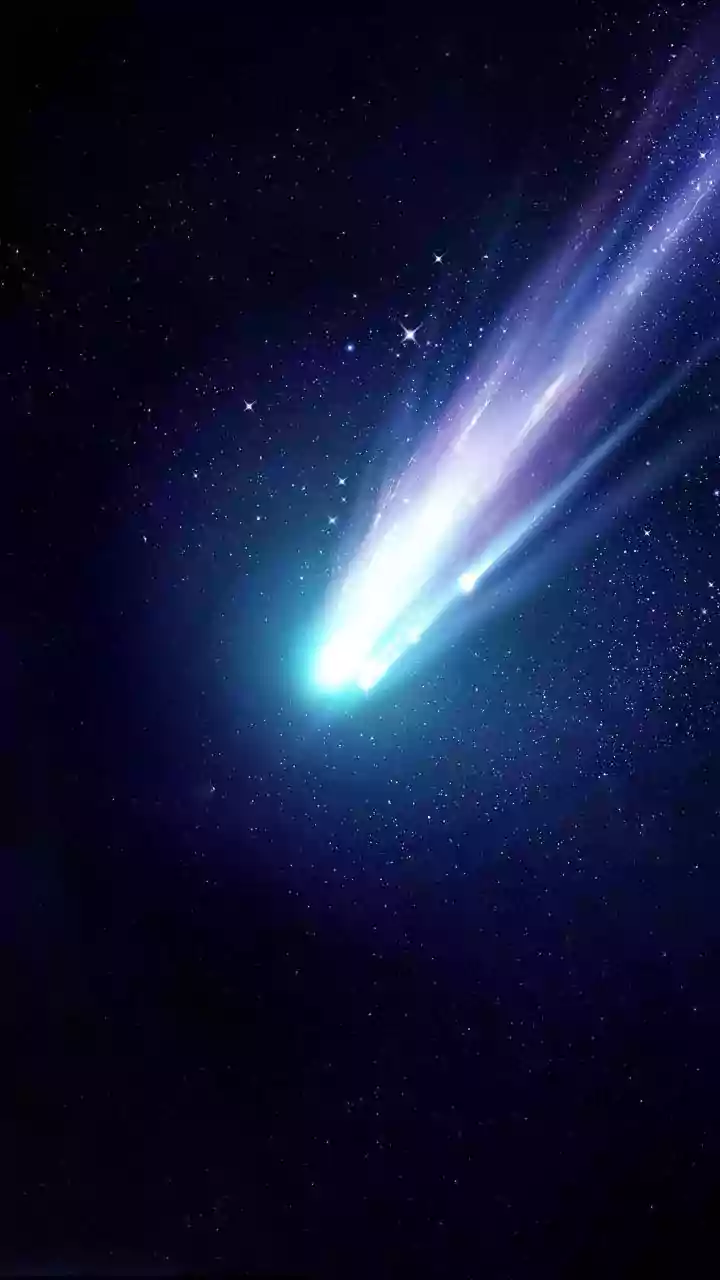
A team of researchers from the Chinese Academy of Sciences and the University of Notre Dame have proposed that this glow is the remnant of a 'kilonova'. A kilonova is a cataclysmic explosion that happens when two neutron stars, the ultra-dense cores left behind by massive stars, spiral into each other and merge. These objects are so dense that a single teaspoon of their matter would weigh billions of tonnes. Their collision is one of the most energetic events in the universe, releasing a tremendous blast of energy and matter. The new research, posted on the preprint server arXiv and yet to be peer-reviewed, suggests a kilonova is the most compelling explanation for the unique properties of HESS J1507−622.
Cosmic Forges of Gold
These stellar collisions are more than just spectacular explosions; they are believed to be the universe's primary factories for heavy elements. The immense energy and flood of neutrons released during a kilonova create the perfect conditions for a process called rapid neutron capture, or the 'r-process'. This is how elements heavier than iron, such as gold, platinum, and uranium, are forged. In essence, the precious metals we value on Earth were likely created in the heart of an ancient, violent neutron star merger. The new study suggests the glow we see now is the leftover radiation from a cosmic gold factory that operated right here in our own galaxy.
A Recent Event, Hidden in Plain Sight
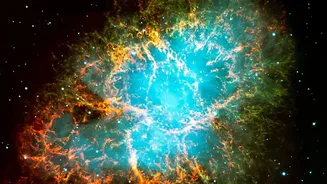
What makes this potential discovery even more exciting is its age. The researchers estimate the collision likely happened less than 1,000 years ago. The glowing cloud is still relatively small and bright, which are signs of a young remnant. At the time of the explosion, it might have shone as brightly as Jupiter in our night sky. So why are there no historical records of it, like the famous 'guest star' of 1054 AD which created the Crab Nebula? The study suggests the event's location in the far southern sky would have made it difficult, if not impossible, to see for the astronomers in China, Japan, and Europe who kept the most detailed records of that era.
The Hunt for Confirmation
If this hypothesis is confirmed, it would mark the first time a kilonova remnant has been identified within the Milky Way. The location away from the galactic plane also supports the theory; binary star systems can get a significant 'kick' when one of the stars goes supernova, flinging them out of the densely populated disk. While the mathematical models presented in the study align well with the observations, the findings are still preliminary. Further observations and analysis will be needed to definitively rule out other possibilities and confirm that astronomers have indeed found the ghost of a spectacular stellar collision in our galactic backyard. The search for more clues will help scientists better understand these rare and powerful events that shape the cosmos.