





The Viscosity Myth: Why Thickness Fails
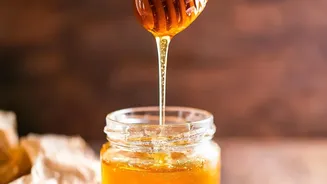
The idea that pure honey must be thick is one of the most persistent myths in food folklore. While it's true that many raw, natural honeys have a satisfyingly thick consistency, this quality is not a guaranteed sign of purity. The viscosity of honey depends
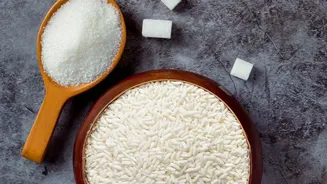
on several factors, including the floral source, the temperature, and its moisture content. For example, honey made from litchi or acacia flowers is naturally thinner and runnier, while ajwain or clover honey tends to be quite thick. Furthermore, adulterators have become incredibly sophisticated. They can easily use thickeners or add cheap syrups like high-fructose corn syrup or rice syrup, which can mimic the dense texture of pure honey, making the thickness test completely misleading. A runny honey might be perfectly pure, and a thick honey could be a well-disguised fake.
Debunking Other Popular Home Tests
Beyond the thickness test, several other DIY methods for checking honey purity are popular but equally flawed. The water test, where pure honey supposedly sinks as a solid lump while fake honey dissolves, can be fooled by dense syrups. Likewise, the flame test, which suggests pure honey will allow a matchstick to burn, primarily just tests for moisture content, which can vary naturally or be manipulated. Other methods, like dropping honey on paper to see if it absorbs or on your thumb to see if it runs, also fall short. Adulterants can be formulated to pass these simple physical checks, making them unreliable for detecting modern, sophisticated forms of honey fraud where C3 and C4 sugar syrups are expertly blended.
What Adulteration Really Means
Honey adulteration is the practice of adding cheaper substances to pure honey to increase volume and profit. The most common adulterants are sugar syrups that are difficult to detect without laboratory analysis. These include high-fructose corn syrup (HFCS), rice syrup, beet sugar syrup, and glucose syrup. These additives dilute the honey, stripping it of its unique flavour profile and, more importantly, its natural health benefits. Some fraudulent practices even involve filtering out the natural pollen from honey, which erases its geographic fingerprint and allows sellers to mislabel its origin, or excessively heating it, which destroys beneficial enzymes.
A Better Indicator: The Crystallization Test
While most home tests are unreliable, one natural process is a very good sign of authenticity: crystallization. Many consumers mistakenly think that honey that has become grainy, cloudy, or solid has gone bad. In reality, the opposite is often true. Crystallization is a natural process where the glucose in honey separates from the water, forming crystals. This is a hallmark of raw, pure honey. The speed of crystallization depends on the honey's glucose-to-fructose ratio and the presence of pollen particles, which act as seeds for crystals to form. Most commercial honeys are heavily processed and ultra-filtered to prevent crystallization and keep them looking perfectly clear and liquid on the shelf, but this processing destroys many of the beneficial enzymes and pollen. So, if your honey crystallizes, it's actually a good sign that it is likely pure and unprocessed.
How to Actually Find Pure Honey
Since home tests are imperfect, the best strategy is to be a smart shopper. The most reliable way to get pure honey is to buy it from a trusted source, like a local beekeeper or a farmers market where you can often talk directly to the producer. When buying from a store, read the label carefully. Look for 'raw' and 'unfiltered' honey. Be wary of labels that say 'a blend of honeys from multiple countries', as this can be a red flag for adulteration. Check the ingredients list to ensure 'honey' is the only thing listed. While no single clue is foolproof, buying from reputable, transparent brands that can trace their honey back to its source is your best defense against fakes. The only way to be 100% certain of purity is through advanced laboratory testing like Nuclear Magnetic Resonance (NMR) spectroscopy, which is not accessible to consumers but used by regulatory bodies and conscientious producers.