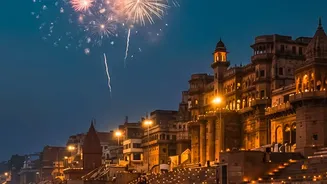









The Heart of the Festival: Why Ghats Matter
Chhath Puja, a four-day festival dedicated to the Sun God, Surya, and his sister, Chhathi Maiya, culminates in rituals performed at water bodies. From November 13 to 16, devotees will observe a series of rituals, but the most significant moments occur
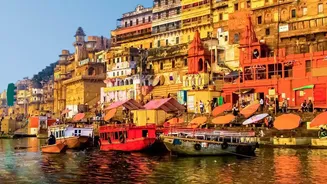
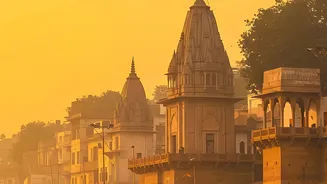
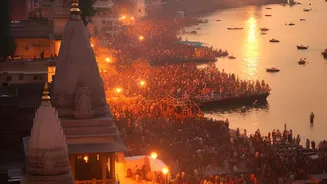
on the evenings of November 15 (Sandhya Arghya) and the morning of November 16 (Usha Arghya). During these times, millions of 'vrattis' (fasting devotees) will stand in rivers and ponds to make offerings to the setting and rising sun, seeking blessings for their family's well-being and prosperity. This makes the river ghats the epicentre of the festival, transforming them into sprawling sites of community worship where distinctions of caste and status dissolve in the shared act of devotion.
An Immense Undertaking: Preparing the Riverbanks
Across Bihar, authorities are working tirelessly to prepare over 10,500 ghats for the influx of devotees. In the capital city of Patna alone, which sits along the Ganga, 103 ghats have been identified, with officials working to make them ready for the festival. Preparations, for which the state's Urban Development and Housing Department has allocated a special grant of ₹8.43 crore, include extensive cleaning, desilting, leveling the riverbanks, and repairing approach roads to ensure easy access for the vast crowds. To accommodate the high number of worshippers, around 55 to 60 artificial ponds are also being created in Patna, providing alternative venues for the rituals. Chief Minister Samrat Choudhary has personally inspected several ghats to review the progress, emphasizing that all arrangements must be completed on time.
Safety as the Highest Priority
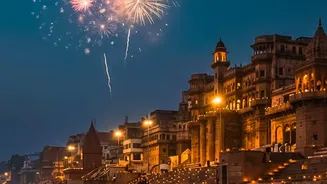
With millions expected to gather, ensuring public safety is a paramount concern. The administration has identified and barricaded unsafe ghats, marking them with red flags to prevent devotees from entering dangerous areas with deep water or strong currents. In Patna, out of 103 ghats, 91 have been declared safe, while others have been marked as dangerous or are still under preparation. To manage emergencies, nine teams of the National Disaster Response Force (NDRF) and State Disaster Response Force (SDRF) will be deployed at key locations along the Ganga, equipped with motorboats and trained divers. Further measures include a ban on firecrackers and private boats near the ghats during the festival. Medical teams and ambulances will also be on standby to handle any health emergencies.
Illuminating Faith and Ensuring Comfort
Beyond safety, extensive arrangements are being made to enhance the spiritual experience for devotees. Over 7,500 additional lights will be installed at ghats and on access roads in Patna to ensure visibility during the pre-dawn and evening prayers. To cater to the needs of the worshippers, hundreds of temporary facilities are being set up, including 552 toilets, 450 urinals, and 400 changing rooms, particularly for the convenience of women and senior citizens. Public address systems will be used to make continuous announcements about safety protocols and available facilities, while 171 watchtowers are being erected for better crowd monitoring. Special traffic plans are also being prepared for major cities, and 150 additional buses will be operated to manage the festive rush.
The Four Days of Devotion
The entire festival is a disciplined spiritual journey spanning four days. It begins on November 13 with 'Nahay-Khay', where devotees take a holy bath and eat a single pure meal. This is followed by 'Kharna' on November 14, which involves a daylong fast broken in the evening with a special prasad of jaggery kheer and roti. After this meal, a rigorous 36 hour waterless fast begins. The fast continues through the main rituals of 'Sandhya Arghya' on November 15, the offering to the setting sun, and concludes with 'Usha Arghya' on November 16, the offering to the rising sun, after which the fast is broken.