









A New Hub for India's Space Ambitions
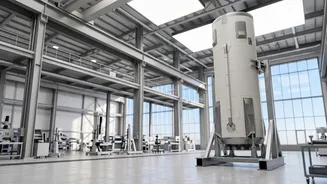
On September 8, 2026, Agnikul Cosmos inaugurated two significant additions to its Chennai operations: the Stage Testing & Inspection Facility (STIF) and the Pressurant Tank Realisation, Over-wrapping and Outfitting Facility (PROOF). The opening, attended
by Gaganyaan astronaut-designate Group Captain Shubhanshu Shukla, underscores the national importance of this development. STIF is an in-house designed facility built to test entire rocket stages in conditions that mimic an actual flight, while PROOF allows Agnikul to manufacture its own high-pressure vessels, which are crucial rocket components. This vertical integration gives the company greater control over production timelines and quality, reducing reliance on external suppliers.
Why Reusability Is a Game-Changer
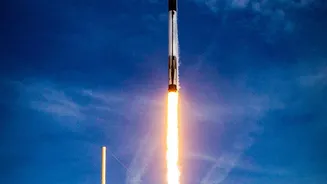
For decades, rockets were single-use machines. Expensive, precision-engineered stages worth crores were simply discarded in the ocean or burned up in the atmosphere after a single flight. Reusable rocket technology, pioneered globally by companies like SpaceX, changes this equation entirely. The goal is to fly a rocket, land its most expensive parts (the booster stages), and then inspect, refurbish, and fly them again. This approach drastically cuts the cost of accessing space, much like how commercial airlines would be impossibly expensive if they had to build a new plane for every flight. Lower costs and faster turnaround times are essential for deploying large satellite constellations, conducting more frequent scientific research, and making space a viable commercial frontier.
The Crucial Task of 'Requalification'
One of the most critical aspects of Agnikul's new STIF facility is its ability to handle the 'requalification' of recovered rocket stages. But what does this mean? After a rocket stage returns from the edge of space, it can't simply be refuelled and launched again. It must undergo a rigorous process of inspection and testing to certify that it is safe and reliable for another mission. This requalification process involves checking for structural fatigue, testing engine performance, and ensuring all avionics and systems are flight-ready. Agnikul's facility can perform full-duration engine burns and simulate mission conditions, making it the only private Indian company with the infrastructure to manage this entire post-flight validation process in-house.
Building on a Foundation of Firsts
This new chapter for Agnikul is built on a series of impressive technical achievements. In May 2024, the IIT Madras-incubated startup successfully launched its Agnibaan SOrTeD (Suborbital Technology Demonstrator). The mission was historic, marking several firsts for India: it was the first launch from a private launchpad, the first flight powered by a semi-cryogenic engine, and the world's first flight of a rocket with a single-piece 3D-printed engine. That 3D-printed engine, named Agnilet, is a core piece of the company's strategy, allowing for rapid design iteration and simplified manufacturing. The successful test flight provided crucial data that is now informing the development of their orbital launch vehicle.
The Bigger Picture for India's Space Economy
Agnikul's investment in reusability infrastructure is more than just a corporate milestone; it's a strategic move that aligns with India's national goals of 'Atmanirbhar Bharat' (self-reliant India). By developing these advanced capabilities domestically, Agnikul is helping to build a robust and competitive private space ecosystem within the country. This reduces India's dependence on foreign launch providers for smaller satellites and positions it to capture a larger share of the global commercial space market, which is projected to grow significantly. As stated by CEO Srinath Ravichandran, the vision is to think beyond a single flight and build the end-to-end capability to test, recover, inspect, and relaunch. This new facility is a concrete step towards making that vision a reality.