


An Unexpected Signal
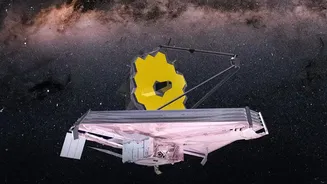
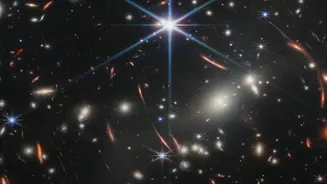
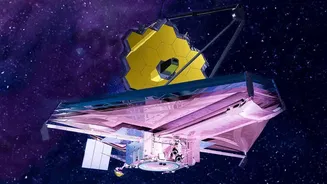
Astronomers were using the James Webb Space Telescope (JWST) to study Beta Pictoris b, one of two previously known planets in the famous system just 63 light-years from Earth. The goal was to analyze the atmosphere of this known world. But as the telescope's
Near-Infrared Spectrograph (NIRSpec) instrument gathered data, it picked up an unexpected signal—a distinct chemical fingerprint that didn't belong to the star or the target planet. It was the tell-tale sign of another world, lurking unseen. This wasn’t a discovery made by spotting a faint dot of light, but by detecting the unique molecular traces of an atmosphere composed of methane, carbon monoxide, and water.
The Bustling Beta Pictoris System
To understand the significance of this find, one has to appreciate the Beta Pictoris system. It's one of the most intensely studied planetary nurseries in our galaxy. At only 23 million years old, it’s a cosmic infant, providing a rare live-action view of planetary formation. The system is known for its huge, bright disk of dust and debris—the raw material for making planets. Before this latest discovery, astronomers knew of two gas giants: Beta Pictoris b, one of the very first exoplanets ever to be directly photographed, and Beta Pictoris c, which was first detected by the gravitational wobble it caused in its star. The addition of a third planet, Beta Pictoris d, makes this only the second system, after HR 8799, to have three or more directly imaged planets.
Getting to Know Beta Pictoris d
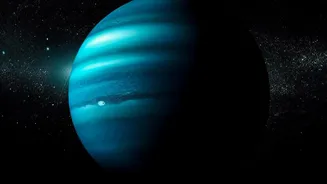
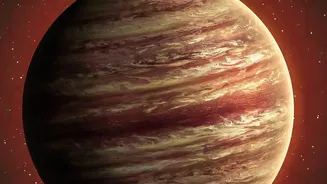
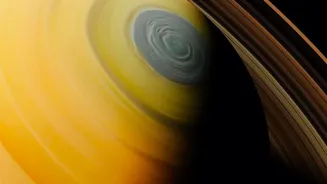
So who is this newcomer? Beta Pictoris d is a gas giant, but it’s the smallest of its siblings, with a mass estimated to be about two and a half times that of Jupiter. It orbits its star at a distance of about 26 to 30 astronomical units—roughly the distance of Neptune from our Sun—giving it a 'year' that lasts about 91 Earth years. This wide orbit places it farther out than its two siblings but still within the system’s massive debris disk. In fact, its presence and position may finally explain the specific shape and sharp inner edge of that disk, a long-standing astronomical mystery. The planet itself has a surface temperature of around 325 degrees Celsius, still glowing from the heat of its formation.
A New Way to Find Planets
Perhaps the most exciting part of this discovery isn't just the planet itself, but how it was found. Traditional direct imaging is difficult in a system like Beta Pictoris because the star's glare and the bright, dusty debris disk act like a cosmic fog, hiding faint planets. The JWST team, however, pioneered a new technique. By using spectroscopy to look for specific molecular signatures, they could effectively ignore the dust and isolate the chemical signals unique to a planet's atmosphere. This is the first time a directly imaged planet has been found primarily through this method. It proves that astronomers can hunt for hidden worlds by their chemical fingerprints, opening a powerful new avenue for finding planets in cluttered, high-glare environments where older methods fail.
Hiding in Plain Sight
What makes the story even more compelling is that Beta Pictoris d wasn't just found by Webb. Spurred by the JWST data, another team of astronomers using the European Southern Observatory's Very Large Telescope (VLT) also confirmed the planet's existence. In a true scientific plot twist, they then checked archival data from past observations and realised the planet had been there all along, hiding in the noise of older images. It was a decade-long game of hide-and-seek that was finally solved by the unprecedented power of the JWST and the fresh perspective it provided. It’s a testament to how new technology can not only make fresh discoveries but also help us re-examine old data to find the treasures hidden within.