



What's Happening on the Ground?
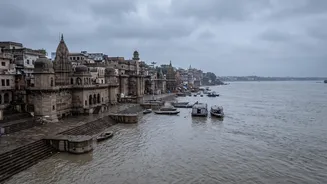
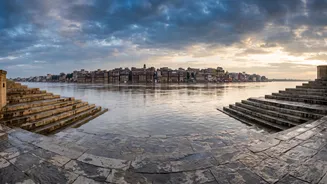
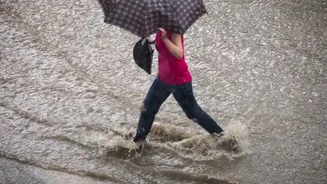
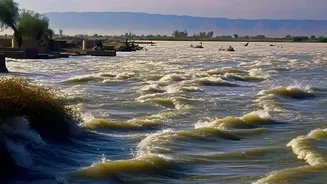
As of early September, the water level of the Ganga River has officially surpassed the designated warning mark of 70.26 meters. Continuous monsoon rains in upstream areas have sent a surge of water downriver, causing the Ganga and its tributary, the Varuna,
to swell. This has prompted the local district administration to intensify monitoring and issue advisories for both residents and visitors. While the river is not yet at its official "danger level" of 71.26 meters, the steady rise has been enough to trigger significant precautionary measures.
The Heart of the Disruption: Ghats and Rituals
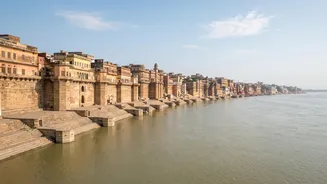
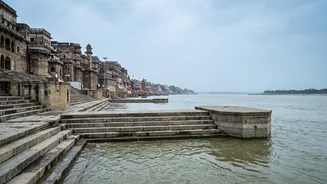
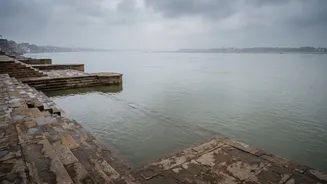
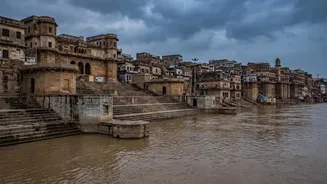
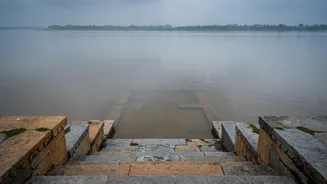
In Varanasi, life revolves around the ghats—the long series of steps leading down to the river. These are not just tourist sites; they are the spiritual and functional heart of the city, used for everything from daily bathing and prayer to laundry and complex funeral rites. The rising waters have begun to submerge the lower portions of many of the city's 84 ghats, making access difficult and dangerous. Key rituals that draw visitors, such as the spectacular evening Ganga Aarti (a fire-lit ceremony of worship), have been forced to move to higher ground or rooftops as their traditional locations become inundated. Cremations at the famous Manikarnika and Harishchandra ghats are also facing disruptions, with proceedings shifted to upper platforms and nearby streets as the river claims the banks.
Official Advisories for Travelers
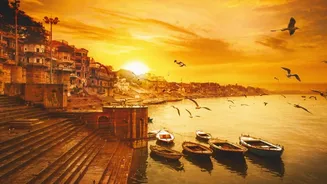
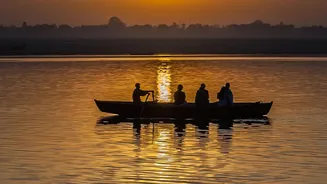
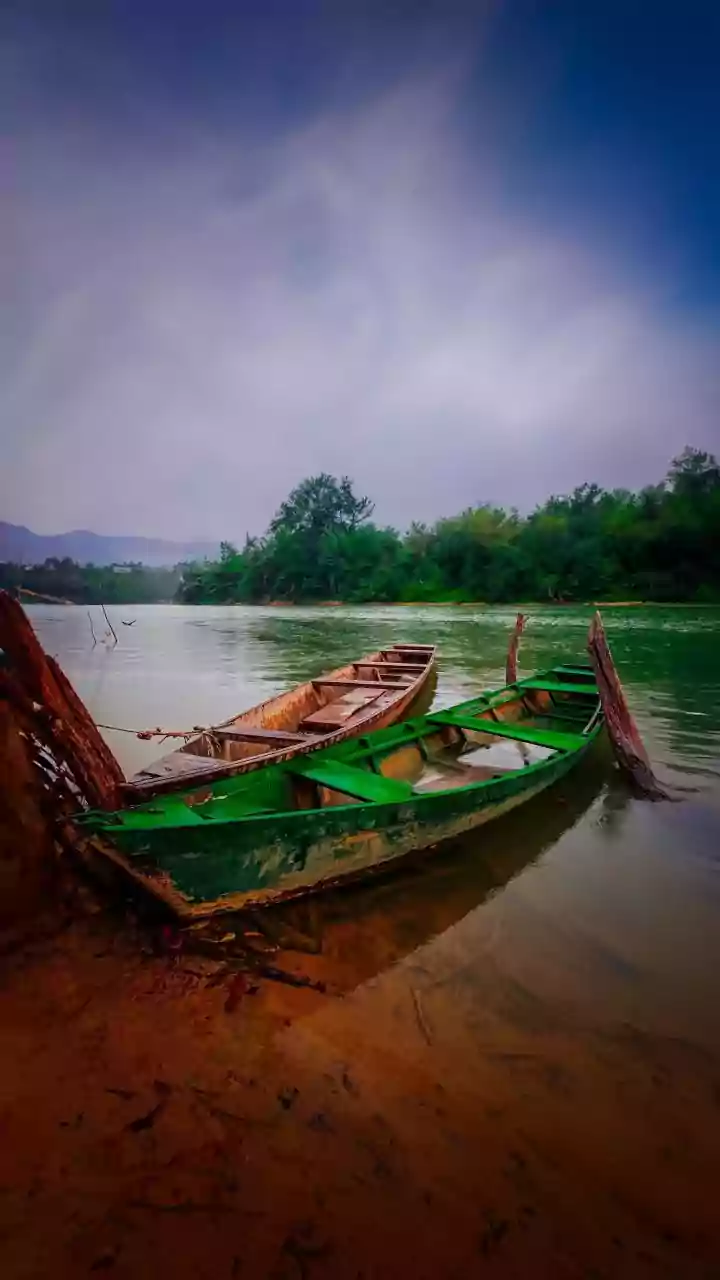
The primary directive from local authorities is one of caution. All boat operations on the Ganga have been suspended indefinitely. This means the iconic sunrise and sunset boat tours, a highlight for many visitors, are currently unavailable. Officials have explicitly urged tourists and the general public to avoid venturing onto the ghats and to stay away from areas with strong currents. Police and National Disaster Response Force (NDRF) teams have been deployed to patrol the riverbanks and ensure safety. For American travelers, this means any itinerary heavily focused on riverside activities will need significant adjustment. While hotels and temples further from the river remain largely unaffected for now, the core ghat experience is severely limited.
Should You Change Your Plans?
If your travel dates are immediate and your primary goal is to experience life on the ghats, it may be wise to reconsider or postpone your visit. The India Meteorological Department has forecast more rain in the coming days, which could cause water levels to rise further. For those already in Varanasi, the advice is to stay informed through local news, heed all official instructions, and exercise extreme caution near any waterlogged areas to avoid the risk of waterborne illnesses. While the city itself is not entirely shut down, the flood situation has impacted over a thousand local residents, with hundreds moving to relief camps set up by the administration.
A Seasonal, Powerful Rhythm
While disruptive, it's important to understand that monsoon flooding is a seasonal event in this part of the world. The Ganga's annual rise and fall is a powerful, ancient rhythm that has shaped life in the Gangetic plain for millennia. The river is considered a living goddess by Hindus, and its floods are often viewed as a natural, if challenging, part of its divine expression. For visitors, the current situation offers a stark reminder of nature's power in one of the world's most spiritually charged landscapes. The same river that offers salvation can also demonstrate immense destructive force, a duality that lies at the very core of Varanasi's identity.