






The View from the Director’s Chair
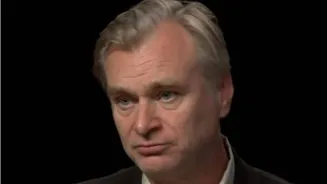
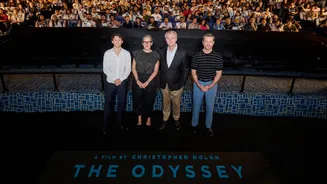
Christopher Nolan, a filmmaker renowned for his commitment to practical effects and large-scale, in-camera spectacle, has become a high-profile voice in the debate over artificial intelligence. In a recent interview, Nolan noted what he sees as a "wholesale
dismissal" of AI-generated content, particularly among younger audiences who he says can spot "AI slop" instantly. The director, whose film 'The Odyssey' opened this summer, argued that after years of digital-heavy productions, there is a renewed appetite for more "tactile, more real forms of storytelling." Coming from the director who famously crashed a real 747 for his film 'Tenet' and won his first Best Director Oscar for the historical drama 'Oppenheimer', his stance is not just philosophical. It represents a conviction that the value of creative work lies in human ingenuity and effort—a sentiment that is currently galvanizing artists across the globe.
Hollywood Draws Its Line in the Sand
Nolan's perspective echoes the formal actions taken by Hollywood's most powerful unions. The landmark 2023 strikes by the Writers Guild of America (WGA) and the Screen Actors Guild (SAG-AFTRA) were pivotal moments in this pushback. For months, the industry was at a standstill as creatives fought for protections against the existential threat of AI. The resulting agreements established crucial guardrails. The WGA contract explicitly states that AI cannot be credited as a writer, nor can its output be used as source material to undermine a human writer's credit and compensation. Studios cannot force a writer to use AI, and they must disclose when AI-generated material is provided. Similarly, the SAG-AFTRA deal secured vital consent and compensation rules for the use of an actor's digital replica, ensuring performers have control over their own likeness. While some issues, like the use of old works for AI training, remain contentious, these contracts represent the most organized and successful industry-wide resistance to date.
A Chorus of Dissent Beyond Film
The resistance isn't limited to the soundstages of Hollywood. The music industry has mounted its own powerful campaign. In a widely publicized open letter, more than 200 artists—including heavyweights like Billie Eilish, Stevie Wonder, and Nicki Minaj—called on tech companies to stop using AI to "infringe upon and devalue the rights of human artists." The letter, organized by the Artist Rights Alliance, condemns the practice of training AI models on their work without permission and the use of AI to create synthetic "sounds" that dilute royalty pools. This follows legislative action like Tennessee's ELVIS Act, which protects artists' voices and likenesses from unauthorized digital cloning. This united front shows that musicians, like their film industry counterparts, are determined to prevent what they call an "assault on human creativity."
The Legal Battle for Copyright
While guilds negotiate and musicians issue public pleas, visual artists and authors are fighting their battles in the courtroom. A series of class-action lawsuits have been filed against leading AI companies like Stability AI and Midjourney. At the heart of these cases is the claim of mass copyright infringement. Artists allege that these companies built their powerful image-generating models by scraping billions of images from the internet and training their AI on this data without the consent of, or compensation for, the original creators. Though the legal proceedings are complex and ongoing, they represent a fundamental challenge to the core business practice of many generative AI firms. Campaigns like the Graphic Artists Guild's "No Artists, No Art" further emphasize the call for consent, credit, and payment whenever an artist's work is used to train an AI model.