



A Surprising Find in a High-Altitude Desert
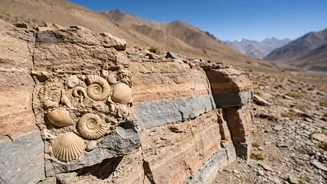
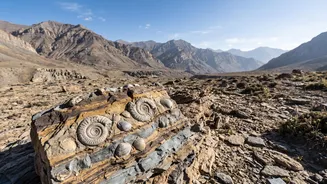
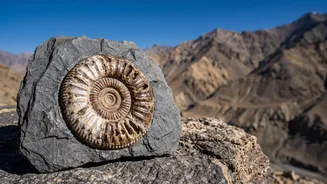
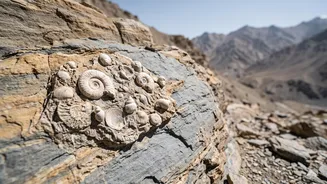
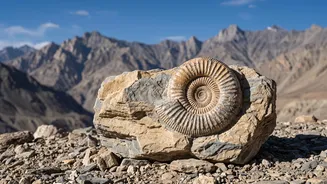
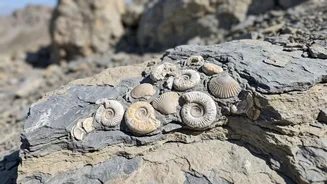
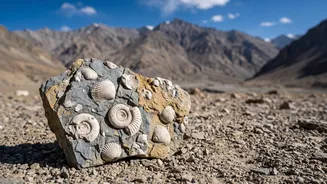
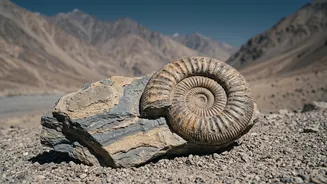
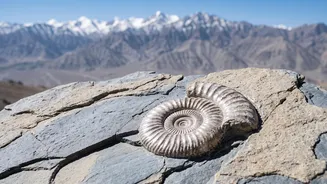
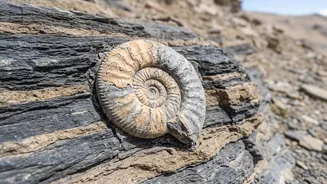
In the cold, arid landscape of Nyoma in eastern Ladakh's Changthang region, a geologist has made a remarkable find: a rich collection of marine fossils. Dr. Ritesh Arya, founder of the Tethys Fossil Museum, unearthed an assemblage of snail-like gastropods,
bivalves, and oyster-like forms. This discovery is significant because it places oceanic life in a location that is now thousands of metres above sea level. Preliminary analysis suggests these fossils are from the Eocene epoch, dating them to approximately 34 to 38 million years old. The find was a surprise even to the experienced geologist. Dr. Arya noted the fossils looked remarkably similar to those found in the Subathu Formation in Himachal Pradesh, but discovering them in Ladakh opens up new possibilities about India's geological history.
How Did an Ocean Get into the Himalayas?
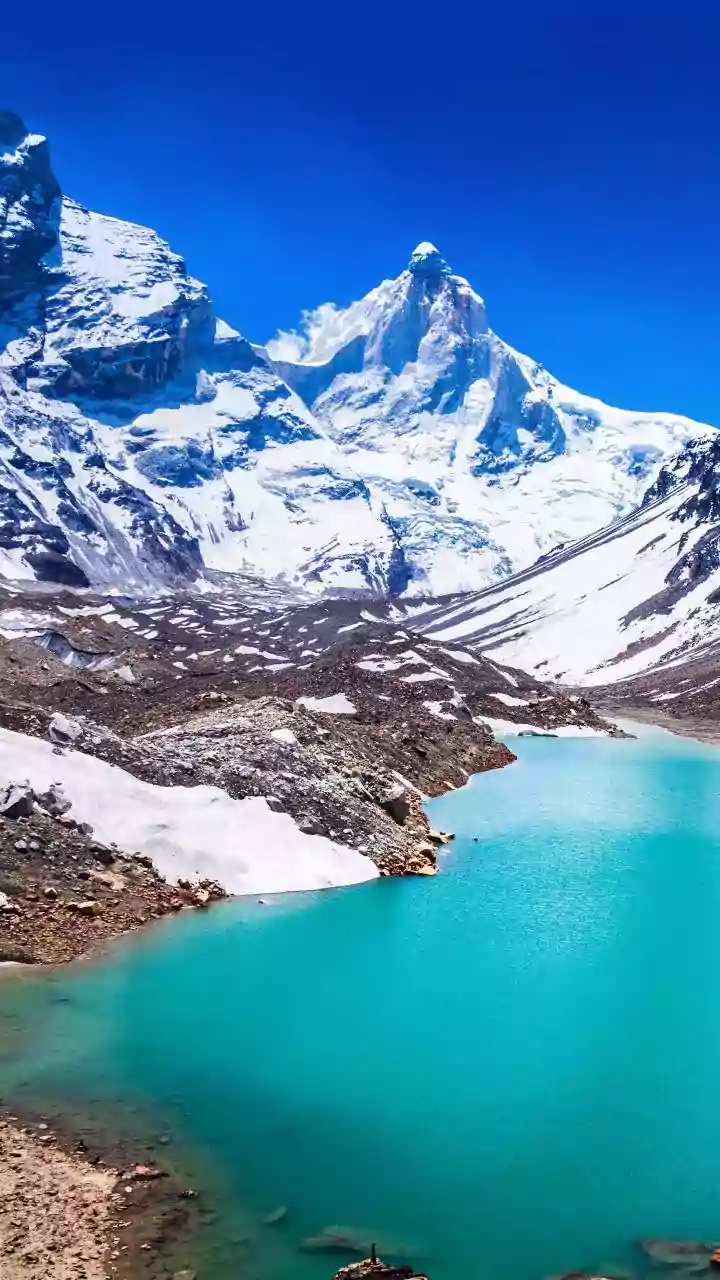
The presence of marine fossils in the Himalayas is the result of one of the most powerful geological events in Earth's history. Millions of years ago, the landmass we now know as India was not attached to Asia. It was an island continent drifting northwards across an ancient body of water called the Tethys Ocean. Around 50 million years ago, the Indian tectonic plate began to collide with the Eurasian plate. The immense pressure of this collision caused the land to buckle and rise, thrusting the Tethys seabed skyward. Over millions of years, this process formed the Himalayan mountain range. The fossils found in Ladakh are the preserved remains of creatures that lived and died in that long-vanished ocean, their shells and skeletons trapped in the sedimentary rock that was once the ocean floor.
A Window into the Eocene World
The period between 34 and 38 million years ago, part of the Eocene epoch, was a very different time. The planet was warmer, and the geography was alien to modern eyes. The Tethys Sea still separated India from the rest of Asia, though it was beginning to shrink due to the ongoing continental collision. The fossils discovered in Ladakh, along with other plant and wood remains found nearby, paint a picture of a near-coastal environment. Instead of a cold desert, this part of Ladakh was likely a warm, shallow marine ecosystem teeming with life. These findings help scientists reconstruct the paleo-environment, offering tangible proof that beneath Ladakh's windswept peaks lie the silent shorelines of an ancient sea.
Why This Discovery Matters
While fossils have been found in the Himalayas before, this specific discovery in Nyoma is crucial for several reasons. Firstly, it suggests that the Eocene marine environment, well-documented in areas like Himachal Pradesh's Subathu Formation, extended much farther east into Ladakh than previously confirmed. This reshapes the scientific understanding of the region's paleogeography. Secondly, these fossils serve as critical data points for dating the final stages of the Tethys Ocean's retreat and the early uplift of the Himalayas. By studying the types of organisms and their location, scientists can refine the timeline of this monumental geological event. The discovery provides a clearer picture of when the sea finally gave way to the mountains, a process that had a profound impact on global climate and biodiversity.
More Than Just Ancient Shells
The fossils are now undergoing detailed study to confirm their precise age and species. This taxonomic and stratigraphic analysis will be critical to solidifying their connection to other Eocene marine successions in the Himalayas. Ultimately, these tiny, spiralled shells tell a grand story. They are a direct link to a lost world, providing invaluable information about Earth's history, from tectonic shifts to climate change. Each fossil is a piece of the puzzle that helps explain how the Indian subcontinent and its most iconic mountain range came to be. They are a powerful reminder that the ground beneath our feet is constantly changing, and that even the mightiest mountains can have their origins in the deep ocean.