




A Planet Under Pressure
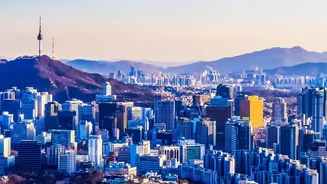
In early August 2026, a punishing heatwave has swept across multiple continents. In Italy, 25 major cities were placed under the highest-level red alert as temperatures neared 40 degrees Celsius. In East Asia, South Korea issued its highest heatwave warning
after a city recorded 42.5 degrees Celsius, the nation's highest temperature since 1904. Japan also saw temperatures climb above 40 degrees Celsius. Meanwhile, parts of the western United States and Egypt are bracing for similarly extreme heat. These are not isolated incidents but different symptoms of a large-scale atmospheric event linking weather patterns across thousands of kilometres.
The Atmosphere's Superhighway: The Jet Stream
The key to understanding this connection lies high up in the atmosphere in the jet stream, a fast-flowing river of air that circles the Northern Hemisphere from west to east. Think of it as a conveyor belt for weather. It forms at the boundary between cold polar air and warmer tropical air. The temperature difference between these two air masses is what powers the jet stream; a larger difference means a stronger, straighter jet. This current steers weather systems, like areas of high and low pressure, around the globe, dictating where it will be stormy and where it will be calm.
When the Weather Gets 'Stuck'
Normally, the jet stream has gentle waves, moving weather systems along at a steady pace. Sometimes, however, these waves can become much larger and more exaggerated, like dramatic north-south kinks in a rope. Scientists call these large meanders Rossby waves. When these waves grow large and slow down or even stall, they create what are known as "blocking patterns." A ridge, or a northward bulge, can trap a high-pressure system in place for days or even weeks. This acts like a dome, causing air to sink, compress, and heat up, leading to prolonged and intense heatwaves on the ground.
The Global Domino Effect
These stuck Rossby waves are the mechanism behind 'teleconnections'—the term for climate anomalies in different parts of the world being related. A large, stationary wave pattern over one continent can have a domino effect, influencing the flow of air and creating another persistent wave pattern thousands of miles downstream. This is how a heat dome over North America can be linked to a heatwave in Europe and another in Asia. The entire system gets locked into a persistent, wavy pattern, causing extreme weather—whether it's heat, drought, or flooding—to get stuck over multiple regions simultaneously.
The Climate Change Fingerprint
While these atmospheric patterns are natural, there is growing evidence that climate change is making them more frequent and intense. One prominent theory, known as Arctic amplification, suggests that because the Arctic is warming much faster than the tropics, the temperature difference that drives the jet stream is shrinking. This could be causing the jet stream to slow down and become wavier, making these persistent, extreme-weather-causing patterns more likely. Essentially, a warmer world is loading the dice, increasing the probability that these interconnected heatwaves will happen more often and with greater severity.