







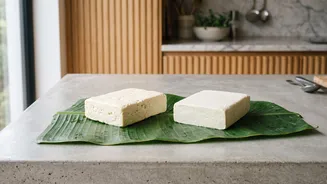
What FSSAI Is Proposing
The Food Safety and Standards Authority of India (FSSAI) has circulated a draft regulation aimed at restricting the use of the term 'paneer' exclusively for products made from milk. The proposed amendment to the Food Safety and Standards (Prohibition
and Restrictions on Sales) Regulations, 2011, would prohibit the manufacture and sale of products as 'paneer' if they are made from non-dairy ingredients. This means companies that produce what are known as 'dairy analogues'—products designed to mimic the look, feel, and function of dairy—would no longer be able to use the word 'paneer' on their labels, even if they are already licensed under the 'Analogue in Dairy Context' category. The proposal is currently in a draft stage, with FSSAI inviting suggestions from the public and stakeholders before making a final decision.
The Core Issue: Consumer Confusion
At the heart of FSSAI's move is the principle of consumer transparency. The regulator's primary goal is to prevent consumers from being misled about the composition of the food they buy and eat. According to FSSAI, a product labelled 'paneer' should align with the consumer's expectation that it is a traditional milk-based product. Dairy analogues, on the other hand, often use vegetable oils, starches, and plant proteins to replicate the texture and appearance of paneer. While not inherently unsafe, these substitutes have a different nutritional profile, often containing less milk protein and more vegetable fat. For many vegetarians in India, paneer is a key source of protein, and the regulator is concerned that consumers may unknowingly purchase a product with lower nutritional value.
A Push from the Dairy Industry and States
This proposed national regulation follows a series of actions at the state level. Several states, including Maharashtra, Gujarat, Karnataka, and Chhattisgarh, have already imposed their own bans or restrictions on the sale of analogue paneer. These actions were often prompted by inspections that found food businesses, from restaurants to caterers, using cheaper analogue products and passing them off as dairy paneer without disclosure. The significant price difference—with analogue paneer costing nearly half as much as its dairy counterpart—creates a strong economic incentive for such substitutions. The dairy industry has long argued that using terms like 'milk' and 'paneer' for plant-based products is misleading and harms the interests of millions of dairy farmers.
The Plant-Based Perspective
Producers of plant-based foods argue that their goal is not to deceive, but to provide alternatives for a growing consumer base that includes vegans, people with lactose intolerance, and those with environmental or ethical concerns. They contend that consumers who seek out 'vegan paneer' or 'soya paneer' are specifically looking for non-dairy options and are not confused. From their viewpoint, using familiar terms helps consumers understand how to use the product—for example, that it can be cubed and used in a curry just like dairy paneer. The plant-based industry has faced similar naming battles over terms like 'almond milk' and 'vegan butter', arguing that restrictive labelling stifles innovation and creates an unfair market. Many have already shifted to using terms like 'beverage' instead of 'milk' to comply with earlier regulatory pressures.
What Happens Next?
If FSSAI's draft amendment is finalized, it will create a uniform national standard, removing any ambiguity left by state-level orders. Companies producing non-dairy paneer analogues will need to rebrand and relabel their products, removing the word 'paneer' entirely. Restaurants and food service businesses will also be under stricter obligation to clearly disclose on their menus when they are using a non-dairy substitute in their dishes. For consumers, the change will mean greater clarity. The word 'paneer' on a package or menu would guarantee a milk-based product, as defined by FSSAI's standards. Those looking for plant-based options will need to look for different terminology, a shift that is already underway as FSSAI also works to standardize labeling for vegan products with a dedicated logo.