




The Magic of Cuttings
One of the most popular and straightforward methods of propagation is taking cuttings. This involves snipping off a piece of a healthy parent plant and encouraging it to grow its own roots. Many houseplants and woody herbs like rosemary, mint, and lavender
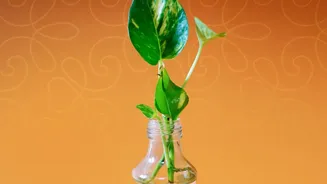
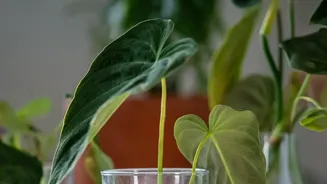
respond well to this method. To start, select a healthy stem and, using clean, sharp scissors, make a cut about four to six inches long, just below a node (the point where a leaf attaches to the stem). Remove the lower leaves, leaving only a few at the top. This prevents the buried part of the stem from rotting. While some plants will readily root in a simple glass of water, others perform better in a pot filled with a soil-less potting mix. For best results, propagate during the plant's active growing season, which is typically spring and summer.
Divide and Conquer Your Perennials
For perennial plants that grow in clumps, such as hostas, daylilies, and many ornamental grasses, division is the key to both plant health and multiplication. Over time, these plants can become overcrowded, leading to a dead center and reduced flowering. Dividing them not only revitalizes the parent plant but also gives you several new plants for free. The best time to divide depends on the plant's blooming cycle. As a general rule, divide summer and fall-blooming perennials in the early spring as new growth emerges. Spring bloomers, on the other hand, should be divided in the fall, giving them time to establish new roots before winter. To divide a plant, carefully dig up the entire root ball. You can then gently pry it apart by hand or use a sharp spade or knife to slice the clump into smaller sections. Ensure each new division has a healthy portion of roots and at least two or three growing points before replanting.
Effortless Expansion with Layering
Layering is a wonderfully low-effort technique that encourages a stem to grow roots while it's still attached to the parent plant. This method is ideal for plants with flexible, low-growing branches like forsythia, rhododendrons, climbing roses, and vining plants. In early spring or late summer, simply select a young, pliable stem and bend it down so that a section of it touches the ground. At that point of contact, you can slightly wound the stem by making a small nick in the bark to encourage rooting. Bury this section of the stem a few inches deep in the soil, using a rock or a U-shaped pin to hold it in place. Leave the tip of the branch exposed to the air. Keep the soil moist, and over several weeks to a year, roots will form. Once the new root system is established, you can snip the new plant from its parent and transplant it.
From Flower to Seedling
Harvesting seeds is a time-honored tradition that connects you to the full life cycle of your plants. It's most successful with open-pollinated or heirloom varieties, as seeds from hybrid plants may not produce offspring that resemble the parent. For flowers like zinnias, marigolds, and calendulas, the process is simple. Allow the flower heads to fully mature and dry out on the plant until they turn brown. Then, snip off the seed heads, place them in a paper bag, and shake it to release the seeds. For vegetables with wet seeds, like tomatoes, the seeds need to be fermented first by scooping them into a jar with a little water for a few days to remove the gel-like coating before rinsing and drying. Always ensure seeds are completely dry before storing them in a cool, dark place in a paper envelope or glass jar for next season's planting.