




What Just Happened in Greenland?
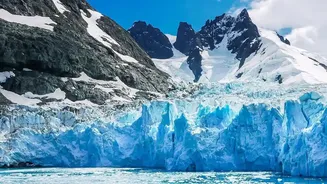
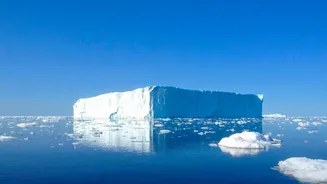
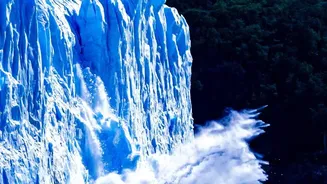
On August 4, 2026, satellite imagery confirmed that a massive section of Petermann Glacier's floating ice tongue had broken away. This process, known as calving, created an iceberg measuring approximately 76 square kilometres. Scientists, who had been
monitoring growing cracks in the glacier for years, were not surprised by the break but noted its significance. The event is the largest single loss of ice for Petermann since a major break in 2012 and the most significant calving event anywhere in the Arctic since 2020. This new ice island is up to 150 metres thick and is now drifting out into the fjord, tracked by international research teams.
A Familiar Story for Petermann
Petermann Glacier has a history of dramatic calving events. As one of Greenland's largest and most important glaciers, it acts as a major artery for ice flowing from the island's interior ice sheet to the sea. Its long floating ice tongue, which stretches for kilometres into the ocean, is naturally prone to breaking. In 2010, the glacier lost a massive chunk of ice measuring around 250 square kilometres, an event that captured global attention. This was followed by another significant break in 2012, which sheared off about 32 square kilometres of ice. The latest event continues this pattern of retreat, highlighting the ongoing instability of one of the Northern Hemisphere's most significant glaciers.
Why This Glacier Matters So Much
Think of the Petermann Glacier's floating ice tongue as a cork in a bottle. This massive shelf of ice acts as a buttress, applying back pressure that slows the flow of the vast ice sheet behind it. When large pieces of this tongue break off, the resistance weakens. This can allow the grounded glacier on land to accelerate its flow into the ocean. While the calving of an already floating iceberg does not directly raise global sea levels, the subsequent speed-up of land-based ice moving into the water does. This is why scientists watch Petermann so closely; its health is a key indicator of the stability of the entire Greenland Ice Sheet, which holds enough frozen water to raise sea levels by several metres if it were all to melt.
The Science of a Glacial Break
The breaking of a glacier is not just a random event. It is often the spectacular finale of a long, slow process driven by a warming planet. One of the primary culprits is the warming ocean. Relatively warm Atlantic water has been detected flowing deep into the fjord, melting the Petermann Glacier from below. This process, called basal melting, is believed to be responsible for the majority of the glacier's recent mass loss and critically weakens the ice tongue. At the same time, warmer air temperatures can create meltwater lakes on the glacier's surface, which can drain through cracks and further fracture the ice. This combination of melting from above and below puts immense stress on the ice tongue, widening existing cracks until a section finally breaks free.
Is This a Sign of More to Come?
The short answer is yes. Scientists monitoring the glacier have already identified other deep rifts that continue to cut across the remaining ice tongue. They predict that at least two more large calving events are likely in the near future, which could be even larger than the August 4 break. If these events occur, the glacier's front will have retreated further inland than at any point in the last century. While each calving event is a natural process, the frequency and scale of these breaks are seen as clear symptoms of an accelerating trend driven by climate change. Researchers will continue to use satellites to track the new iceberg and the glacier itself, as its evolution provides crucial clues about the future of the Arctic and the impact on global sea levels.