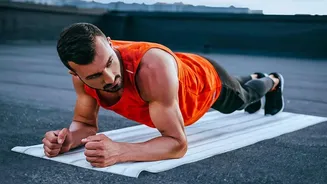


The Static Plank Comfort Zone
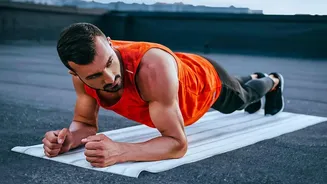
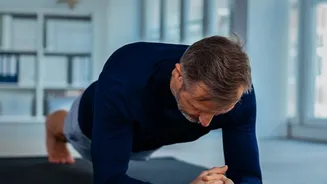
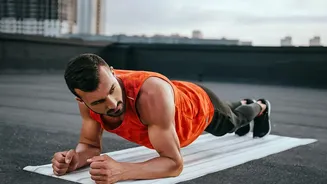
The standard plank is an isometric exercise, meaning your muscles are contracting without changing length. You hold a rigid position, and your core fires up to prevent your midsection from sagging and to maintain a straight line from head to heels. For
beginners, this is a fantastic way to build foundational core stability and endurance. It teaches you to engage deep stabilizing muscles, like the transverse abdominis, which act like a natural corset for your spine. The initial gains are often rapid as your neuromuscular system learns the movement and your muscles begin to adapt.
When Progress Comes to a Halt
The very thing that makes your body amazing is also why you hit plateaus: adaptation. After several weeks of the same routine, your body becomes incredibly efficient at holding a static plank. The exercise that once felt challenging now requires less effort and energy. As a result, the stimulus for muscle growth and strength development significantly decreases. Holding a plank for five minutes might feel like an accomplishment, but if your form breaks down, you're stressing your lower back more than your abs. Simply adding more time to a static hold primarily builds endurance, not the functional strength needed for dynamic daily activities.
The Upgrade: Embracing Active Planks
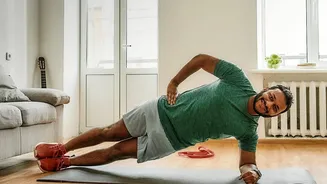
The key to breaking through a plateau is introducing a new challenge through progressive overload. In the world of planks, this means adding movement. Active, or dynamic, planks involve maintaining the stable core of a plank while moving your limbs. This simple change does several powerful things: it forces your core to constantly adjust to shifting weight, which intensely recruits stabilizer muscles to prevent rotation. It also mimics the demands of real-life activities and sports, building functional strength that static holds alone cannot.
Active Plank: Shoulder Taps
Start in a high plank position with your hands directly under your shoulders and your feet hip-width apart. Keeping your hips as still as possible (imagine balancing a glass of water on your lower back), lift your right hand to tap your left shoulder. Return your right hand to the floor and repeat with the left hand tapping the right shoulder. The goal is to fight the urge to rock your hips. This anti-rotation challenge fires up your obliques and deep core stabilizers.
Active Plank: Plank Jacks
This variation adds a cardiovascular element. From a high or forearm plank position, jump your feet out to the sides, wider than your hips, and then immediately jump them back to the starting position. It’s like a horizontal jumping jack. The quick movement requires your core to work overtime to maintain stability and prevent your hips from bouncing up and down. You get the dual benefit of a core workout and a heart rate spike.
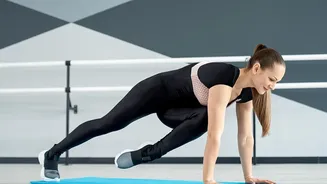
Active Plank: Spiderman Planks
From a high plank position, slowly bring your right knee towards the outside of your right elbow. Pause for a moment, engaging your obliques, then return to the starting position. Repeat on the left side. This movement not only sculpts the sides of your waist but also improves hip mobility. The slow, controlled motion is key to maximizing muscle engagement and getting the full benefit of the exercise.
Active Plank: Plank Walkouts
Start standing with your feet hip-width apart. Hinge at your hips, place your hands on the floor, and walk them forward until you are in a high plank position. Hold for a second, ensuring your core is tight, and then walk your hands back towards your feet and return to standing. This full-body movement engages the shoulders, hamstrings, and the entire core through a dynamic range of motion, making it a highly effective and functional exercise.