






A Discovery Deep in Time
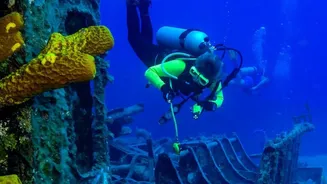
In the turquoise waters off the coast of Türkiye, near Kekova Island, marine archaeologists have made a discovery that sends ripples through our understanding of the ancient world. Resting nearly 100 feet below the surface is not a ship, but the ghost
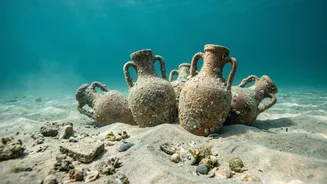
of one. The wooden hull, once a sturdy vessel of commerce, disintegrated millennia ago, but its precious cargo remains as a 'time capsule' on the seabed. Researchers have uncovered more than 30 ceramic storage jars, known as amphorae, and three stone anchors, all dating to the Early Bronze Age, between 4,400 and 4,700 years ago. This makes it the oldest known shipwreck cargo ever found, predating the previous record-holder by several hundred years.
What the Ancients Were Shipping
The collection of amphorae provides a fascinating glimpse into an early globalized economy. Analysis of the clay suggests the jars were made in the Jordan Valley, a region known today to border Israel, Jordan, and the West Bank. Inside some of the vessels, archaeologists were stunned to find a glossy, viscous residue still visible after nearly five millennia. While analysis is ongoing, the contents were likely valuable commodities like olive oil, wine, or tree resin. The ship, estimated to have been about 10-15 meters long, was likely transporting these goods from the Levant westward toward destinations like Troy or the Minoan civilization on Crete. Similar pottery has been found in Egypt, Troy, and Crete, reinforcing the idea of a vast and active trading network. One particularly unusual jar with strange markings and holes has led to an intriguing theory: it might have been a churn for making butter or cheese, suggesting sailors may have even kept livestock like goats on board during long voyages.
Shattering the Old Timeline
The significance of this find cannot be overstated. For decades, the prevailing view was that extensive, open-sea maritime trade in the Mediterranean began much later, during the Middle and Late Bronze Ages. This discovery shatters that timeline. By placing a fully-laden cargo ship on a long-distance route around 2700 BCE—the same era the great pyramids were being built in Egypt—it proves that the age of sail and complex commerce is far older than we knew. Before this, the oldest known shipwreck was dated to around 4,200 years ago. This find pushes that record back by up to 500 years, forcing a major revision of when sophisticated, organized shipping networks truly began. It suggests that the technological skills for navigation and the economic and political structures needed to support such trade were in place much, much earlier.
A More Connected Ancient World
This sunken cargo tells us that the world of the Early Bronze Age was far more interconnected than previously imagined. It wasn't a world of isolated civilizations, but one linked by sea lanes that carried not just goods, but ideas, technologies, and culture. The existence of such trade implies a high degree of organization, from the potters who made the jars, to the farmers who produced the oil or wine, to the sailors who risked their lives on the open sea. For Hakan Öniz, the archaeologist who led the excavation, the find is deeply human. 'We are the first humans who [have] touched these objects after 5,000 years,' he told the BBC. It serves as a powerful reminder of the unnamed sailors on that ship, individuals who were part of a complex global story that we are only just beginning to fully understand.