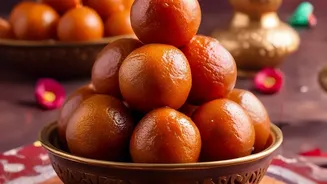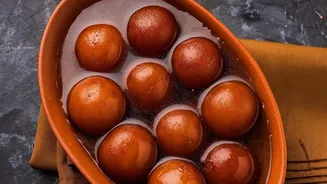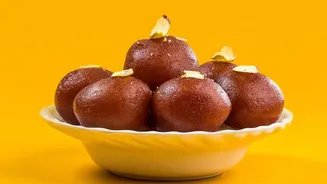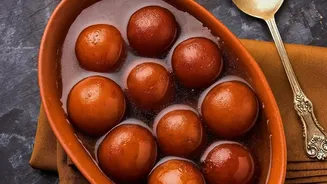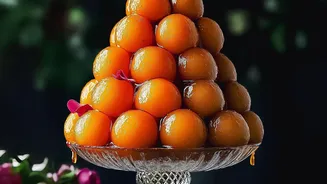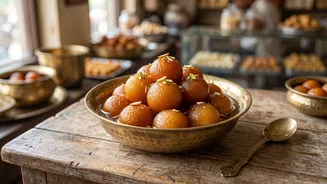





On the busy stretch of National Highway 24 between Delhi and Lucknow, a sweet aroma hangs in the air. This is Maigalganj, a village that has become an essential stop for travellers, not for a monument, but for a taste of its legendary gulab jamuns.
A Highway Ritual
For
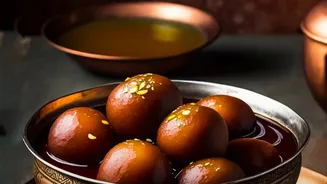
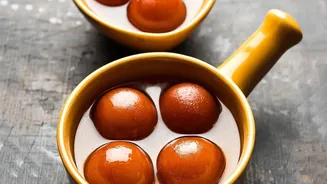
anyone journeying through the Lakhimpur Kheri district of Uttar Pradesh, Maigalganj is a mandatory halt. A stretch of road barely half a kilometre long is dotted with over a hundred sweet shops, many bearing some variation of the name 'Mashhoor Gulab Jamun Ki Dukan' (Famous Old Gulab Jamun Shop). Here, the air buzzes with the activity of vendors and the chatter of customers. Buses, cars, and trucks pull over at all hours. Travellers stretch their legs and make a beeline for a hot, fresh serving of gulab jamun, often presented in traditional earthenware bowls called matkas, which add a subtle earthy note to the sweet. It’s a ritual to eat a few on the spot and get a box packed for family and friends back home.
A Legacy That Began in 1941
While the gulab jamun itself has a rich history with potential origins in medieval Persia, Maigalganj's own story is more recent. Most locals and shop owners trace the town's sweet legacy back to 1941, when a vendor named Dhanpal set up the first stall. At the time, the area was undeveloped and the roads were primitive. Yet, the fame of his gulab jamuns, made with pure khoya (milk solids), spread through word-of-mouth among travellers. As his shop grew, others followed, and by the 1970s, Maigalganj had firmly established its identity as a gulab jamun hub. Today, descendants of the original pioneers continue the tradition, with some shops being run by the third or fourth generation.
What Makes It Special?
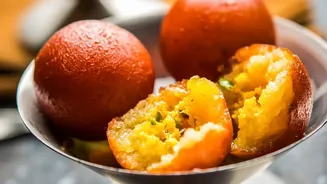
While the basic recipe is familiar—khoya kneaded with a bit of flour, fried, and soaked in syrup—the magic of Maigalganj's version lies in its freshness and texture. The gulab jamuns here are known for being incredibly soft and are served piping hot. The secret, according to local artisans, is in the details: using pure desi khoya, a meticulously prepared sugar syrup, and a pinch of white cardamom powder. The syrup is prepared to an 'ek-taar' or 'single-string' consistency, which is crucial for ensuring the jamuns remain soft without breaking apart. This attention to craft results in a sweet that is tender and melts in the mouth, encouraging many to have more than just one.
An Entire Village's Identity
The gulab jamun is more than just a business in Maigalganj; it is the village's identity. As one long-time worker, Balbir Singh, noted, without this dessert, Maigalganj would be just another anonymous village on a highway. The sweet has put the town on the map, creating a micro-economy that supports hundreds of families. Despite the dozens of shops competing side-by_side, there is a sense of shared purpose rather than fierce rivalry. As one shopkeeper explained, there's enough business for everyone because people come seeking the 'Maigalganj gulab jamun', not just one specific shop. This collective reputation has turned a simple highway stop into a celebrated food destination, a testament to the enduring power of a single, perfectly made dish.