






A Trial Through Treacherous Terrain
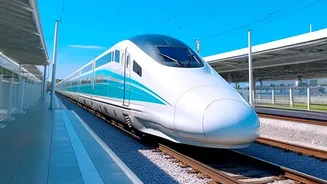
On August 12, 2026, a specially modified 20-coach Vande Bharat rake embarked on a critical trial run along the 55-kilometre stretch between Sakleshpur and Subrahmanya Road. This wasn't just another test; it was a mission to determine if the advanced trainset
could safely and efficiently navigate one of the most challenging railway sections in the country. Conducted by the Mysuru Division of South Western Railway, the trials are a crucial step toward launching a much-anticipated Vande Bharat service connecting Bengaluru with the coastal hub of Mangaluru. Personnel from the Research Designs and Standards Organisation (RDSO) were on board to meticulously evaluate the train's performance, from stability and acceleration to its all-important braking capabilities.
What Makes This Ghat Section So Difficult?
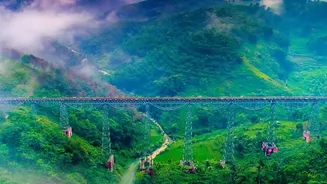
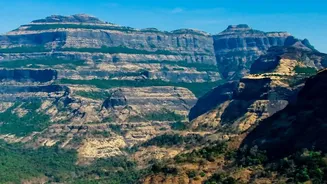
The Sakleshpur-Subrahmanya line, winding through the dense forests of the Western Ghats, is an engineering marvel but an operational headache. The section features a steep gradient of 1-in-50, meaning the track rises or falls one metre for every 50 metres travelled. This dramatic change in altitude is compounded by 108 sharp curves and 57 tunnels, forcing trains to move at a restricted speed. The area is also highly susceptible to landslides and rockfalls during the heavy monsoon season. Furthermore, much of the track is inaccessible by road, making maintenance and potential rescue operations incredibly complex. These factors combined have traditionally required special measures for any train passing through, making it a true test of railway engineering and technology.
The Banker Engine Problem
For decades, traversing this ghat section has required the use of 'banker' locomotives. These are additional engines attached to the rear of a train to provide extra power while climbing the steep slopes and to assist with braking when descending. However, the Vande Bharat is a self-propelled trainset without a separate locomotive, a design that presents a unique challenge on such demanding terrain. The recent trial was specifically designed to test a key innovation: a custom-fitted Automatic Emergency Braking (AEB) system. This technology is designed to automatically control the train's speed and ensure its stability on steep downhill gradients, potentially eliminating the need for banker engines altogether. During the August 12 trial, the Vande Bharat successfully navigated the section without any banker locomotive assistance, a historic first for this route.
A Successful Test with Caveats
The initial trial was a resounding success. The Vande Bharat rake smoothly descended from Sakleshpur, which is at an altitude of nearly 900 metres, to Subrahmanya Road at around 114 metres, and then successfully climbed back up. The AEB system performed as expected, managing the train's speed through the numerous curves and steep sections. However, railway officials are proceeding with caution. The trials are scheduled to continue for several more days to gather comprehensive data on the train's performance under various conditions. The final report from the RDSO will be critical in giving the green light for regular passenger services. The successful electrification of this entire stretch, completed in late 2025, was the foundational step that made these electric-powered trials possible.
What This Means for Karnataka
If these trials lead to final approval, the launch of a Bengaluru-Mangaluru Vande Bharat service would be a game-changer for connectivity in Karnataka. The journey, which currently takes a considerable amount of time by road or conventional rail, could be significantly faster and more comfortable. This would provide a major boost to tourism, business, and daily commuters travelling between the state's IT capital and its vital coastal region. While there is still speculation about the final route and schedule, the successful trial run has brought the prospect of high-speed, modern rail travel through the heart of the Western Ghats one giant leap closer to reality.