








The 'Why' Behind Self-Reliance
The push for 'Aatmanirbhar Bharat', or a self-reliant India, gained momentum in the wake of the COVID-19 pandemic. The crisis exposed deep vulnerabilities in global supply chains, revealing an over-reliance on a few countries for essential items. For
India, this meant shortages of everything from pharmaceutical ingredients to electronic components. The goal isn't isolation, but strategic de-risking. By building domestic capacity, the government aims to ensure that the nation can withstand future global shocks, whether they are pandemics, geopolitical conflicts, or trade disputes. It's a shift from simply being a consumer to becoming a major producer, creating a more resilient and self-sustaining economy.
Defining 'Critical Goods'
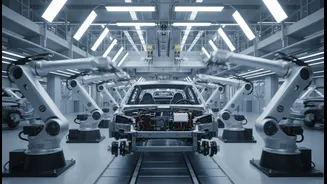
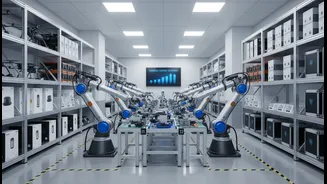
The focus of this localisation drive is on specific, high-stakes sectors. These are not random industries but ones deemed vital for national security, public health, and future economic growth. Key areas include Active Pharmaceutical Ingredients (APIs), the building blocks for medicines, where India has been heavily import-dependent. Another major focus is electronics, particularly semiconductors, which are the brains behind every modern device. Other priority sectors are automotive components, especially for electric vehicles; advanced chemistry cell batteries; high-value textiles; and defence equipment. The strategy is to move up the value chain, from assembling products to manufacturing the core components domestically.
The PLI Scheme: A Performance-Based Push
The primary tool for this mission is the Production Linked Incentive (PLI) scheme. Launched in 2020, this programme takes a different approach from old-school protectionism. Instead of just hiking import tariffs, the PLI scheme rewards companies with financial incentives based on their incremental sales of goods manufactured in India. This performance-based model encourages both domestic and foreign firms to increase production within the country. With an outlay of nearly ₹1.97 lakh crore across 14 sectors, the scheme has attracted significant investment commitments and is credited with boosting domestic manufacturing, particularly in electronics, and creating hundreds of thousands of jobs.
Simultaneously Opening the Trade Door
Herein lies the balancing act: even as India focuses on domestic production, it is aggressively pursuing Free Trade Agreements (FTAs). This dual approach signals that self-reliance is meant to build a stronger negotiating position, not to retreat from global trade. In early 2026, India concluded a landmark FTA with the European Union, one of its largest trading partners. Active negotiations are also underway for a significant trade deal with the United States. Deals have also been signed with the UK, Australia, and the UAE in recent years, demonstrating a clear intent to integrate more deeply into the global economy. This strategy aims to secure new markets for Indian goods and services, ensuring that 'Make in India' is also 'Make for the World.'
Challenges and Global Scrutiny
This ambitious strategy is not without its challenges and critics. Some trading partners and global bodies worry that these policies could be a form of disguised protectionism, leading to higher trade barriers. Implementing the PLI schemes effectively, ensuring disbursements are timely, and encouraging genuine value addition beyond simple assembly are significant hurdles. There is also the broader challenge of navigating a complex geopolitical landscape, particularly with pressures from major partners like the US regarding trade practices and sourcing. For instance, India recently amended its foreign trade policy to ban imports made with forced labour, a move seen as aligning with global standards and potentially easing trade negotiations with Western partners. The success of India's localisation drive will depend on its ability to boost competitiveness and innovation, not just on subsidies.