





A Cosmic Event Goes Unseen
Sometime between April and May of 2024, an object likely the size of a six-story building slammed into the Moon. Despite its magnitude, the impact went completely undetected by telescopes on Earth and in space at the time. This wasn't for lack of watching;
the event simply occurred in the vastness of space without a real-time witness. It created a colossal crater, but for over a year, no one on Earth knew it was there. The mystery began not with a bang, but with silence. It left a cosmic crime scene with no witnesses, waiting to be discovered.
The Detective in Lunar Orbit
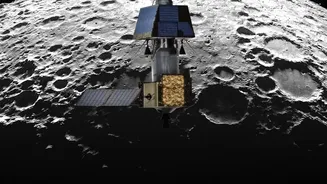
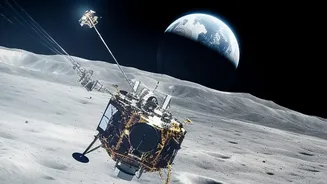
Enter the hero of the story: NASA’s Lunar Reconnaissance Orbiter (LRO). Launched in 2009, the LRO has been circling the Moon for over 17 years, meticulously mapping its surface with a suite of powerful cameras and instruments. Its primary mission is to create a detailed atlas of the Moon, but its long-term presence has turned it into an unparalleled change-detection machine. By regularly imaging the same areas, scientists can compare photos taken years apart to spot new features. It was during one such routine check in August 2025 that the story began to unfold.
Cracking the Case
The discovery was a moment of pure scientific serendipity. Robert Wagner, an image-processing specialist, was performing a routine data check when he noticed an unusually bright spot on a new map. He said he “just stopped, dropped everything, and started looking into what that spot was.” By comparing the new images from 2025 with older ones, he confirmed it: a massive new feature had appeared. This wasn't just another small pockmark. Follow-up observations confirmed they had found the largest new impact crater identified in the solar system to date.
Anatomy of a 'Once-in-a-Century' Impact
The new feature was officially named McGetchin crater, after the late planetary scientist Thomas McGetchin. It is a staggering 222 metres across—bigger than the Roman Colosseum—and about 43 metres deep. The impact was so violent that it hurled rock and dust more than 100 kilometres across the lunar landscape. Scientists estimate that an impact of this scale is a rare event, happening only about once every 132 years, making this a "once-in-a-lifetime observation". It is three times larger than the previous record-holder for a new crater found by the LRO.
More Than Just a Hole in the Ground
This discovery is more than just a novelty; it provides a treasure trove of scientific data. One of the most striking findings came from the LRO's thermal instrument, which found a 7-kilometre-wide "cold spot" around the crater. The impact effectively "fluffed up" the lunar soil, or regolith, making it less dense and less able to hold onto heat. Understanding these effects is critical as NASA and other agencies plan to build permanent bases on the Moon. It helps scientists calculate the risk from impacts and design structures that can withstand the constant barrage of small particles. This fresh impact site acts as a natural laboratory, showing in pristine detail what happens when a significant object strikes the Moon, and helps calibrate how quickly the lunar surface is being churned, a process some scientists liken to gardening.