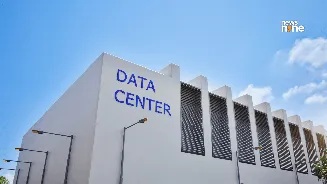









A Major Investment in India's Digital Future
SpaceX's satellite internet venture, Starlink, has laid significant groundwork for its long-awaited Indian debut. A senior executive confirmed at the India Mobile Congress 2026 that the company has established 20 gateway sites, equipped with hundreds
of antennas, across India. This major infrastructure investment signals that Starlink is operationally ready to begin service as soon as it receives the final green light from regulators. Lauren Dreyer, Starlink's Vice President of Business Operations, stated that the company has been working with Indian authorities for five years to align its services with the country's requirements, including developing specific security controls to ensure Indian user data remains within India. This move positions Starlink to become a formidable player in a market that still has a significant portion of its population, particularly in rural areas, without reliable high-speed internet.
What Exactly Are These Ground Sites?
Think of these 20 ground sites, also known as gateways or Earth stations, as the critical bridge between the internet in space and the internet on the ground. Starlink's constellation of Low Earth Orbit (LEO) satellites beams internet signals down, but those signals need to connect to the physical internet backbone here on Earth. That’s the job of a gateway. When you click a link, your request travels from a small dish at your home up to a satellite, which then relays it down to one of these ground stations. The station fetches the data from the global internet and sends it back up to the satellite, which then beams it to your home. This entire round trip happens in milliseconds. By building 20 of these sites, Starlink is creating a robust, widespread network capable of handling massive amounts of data traffic and ensuring reliable connectivity across the subcontinent.
The Race for India's Satellite Internet Market
Starlink is not entering an empty arena. The race to provide satellite broadband in India is already heating up. Key competitors include Bharti-backed Eutelsat OneWeb and Reliance's Jio Satellite Communications, both of which have also secured the necessary Global Mobile Personal Communication by Satellite (GMPCS) licenses. Eutelsat OneWeb, in fact, received its authorization from the Indian space regulator IN-SPACe back in November 2023 and has stated it is ready to launch as soon as it gets its final spectrum allocation. Jio is also making ambitious plans for its own satellite constellation. While Starlink has its licenses in hand and infrastructure on the ground, the final approvals for spectrum assignment and security clearance remain the last hurdles for all players. The competition is expected to be fierce, likely driving innovation and competitive pricing for Indian consumers.
Navigating the Final Regulatory Hurdles
While the physical infrastructure is in place, the path to a commercial launch is paved with regulatory paperwork. Starlink secured its GMPCS license in June 2025 but is still awaiting final security clearances and, crucially, spectrum assignment from the Department of Telecommunications (DoT). These final nods are non-negotiable. India's regulatory framework for satellite communications is stringent, with a strong focus on national security—a policy shaped in part by experiences during the 2008 Mumbai attacks, where satellite phones were used by the attackers. Authorities are particularly concerned about the potential for foreign satellite networks to bypass Indian gateways, which is why Starlink has emphasized that its system is designed to keep data localized. The government is proceeding cautiously, ensuring all security protocols are met before any company can officially 'switch on' its service.
The Promise for Rural and Remote India
The ultimate promise of satellite internet is its ability to bridge the digital divide. For millions of people in India's remote and rural areas, where laying fiber optic cable is geographically difficult and economically unviable, satellite broadband offers a transformative solution. It can bring high-speed connectivity to underserved villages, boosting access to education, healthcare, and digital financial services. This technology is not just about faster streaming; it’s about enabling precision agriculture for farmers, strengthening disaster management with reliable communication channels, and integrating millions more into the formal economy. With a large percentage of the rural population still lacking internet access, the entry of services like Starlink could significantly accelerate India’s journey toward 100% connectivity and unlock immense economic potential.