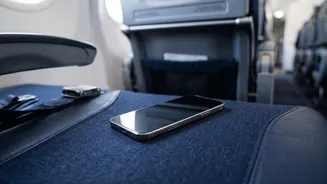








It’s a moment of pure panic: you’ve landed, left the airport, and suddenly realise your headphones, book, or tablet is still in the seatback pocket. But don't despair. A dedicated system is in place to help get your items back.
The Golden Rule: Act Immediately
The single most important
factor in retrieving a lost item is speed. The moment you realise something is missing, your chances of a quick recovery are highest. If you are still at the airport, do not leave the gate area. Find an airline staff member right away. They might be able to get a crew member to check your seat before the aircraft is cleaned and prepared for its next flight. This immediate, in-person action is your best shot for a swift reunion with your forgotten property. If you've already left the airport, the process shifts online, but time is still of the essence.
Airline or Airport: Knowing Who to Contact
One of the biggest mistakes travellers make is contacting the wrong entity. Where you lost the item determines who is responsible for it. For anything left on the aircraft itself, in the airline's lounge, at the check-in counter, or in the gate area, the airline is your point of contact. However, if you lost your item at a security checkpoint, in a food court, restroom, or any other general area of the terminal, you need to contact the airport's own lost and found department. These are separate operations, and knowing the difference will save you valuable time. In India, the Central Industrial Security Force (CISF) often finds items and hands them over to the appropriate airport operator.
Filing a Report: The Power of Detail
Once you've left the airport, your next step is to file a formal lost item report, which is almost always done online through the airline's or airport's website. Vague descriptions are the enemy of a successful recovery. Be as specific as possible. Instead of 'black laptop', provide the brand, model, size, and any unique identifiers like stickers, scratches, or a specific case. For electronics, a serial number is incredibly helpful. You will need to provide your flight number, seat number, and contact details. After filing, you should receive a reference or tracking number to monitor the status of your report.
Behind the Scenes: What Happens Next
When an item is found on a plane, cleaning crews or flight attendants hand it over to the airline's ground staff. It is then taken to the airline's local baggage service or lost and found office at the airport. Here, staff catalogue the item, recording a description, and where and when it was found. They then attempt to match it with incoming online reports. This process is not instant; it can take several days or even weeks for an item to be processed and matched. If a match is found, the airline will contact you via email or phone with instructions on how to proceed.
If your item is located, you will generally have two options: collect it in person from the airport's lost property office or have it shipped to you. To claim an item in person, you will need to provide proof of ownership and a government-issued ID. If you are authorising someone else to collect it, they will need an authorisation letter from you along with copies of your IDs. Be aware that almost all airlines and airports will require you to cover the shipping costs if you choose to have the item mailed. Many airports in India do not offer courier services directly, so this often requires coordinating with a third-party service.
What happens to the mountain of items that are never claimed? Most airlines and airports hold onto items for a set period, typically ranging from 30 to 90 days. In India, the Airports Authority of India (AAI) norms suggest a holding period of about three months. After this time, and if no owner has been identified, the items are often sold at auction, donated to charity, or destroyed. Personal data on electronics is typically wiped clean before disposal to protect privacy. This makes it crucial to file a report promptly to ensure your item doesn't end up in a public auction.