



A Cosmic Ghost Story
In the vast expanse of the cosmos, few events are more violent than the collision of two neutron stars. These are the ultra-dense cores left behind after massive stars explode. Imagine objects more massive than our Sun, crushed into a space the size of a city,
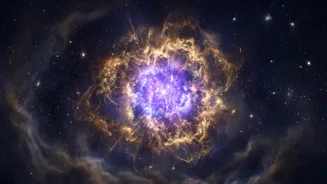
spinning and spiraling toward each other before a final, cataclysmic merger. This collision creates an explosion known as a kilonova, an event so powerful it outshines entire galaxies and ripples the very fabric of spacetime with gravitational waves. For decades, these events were theoretical, but now astronomers believe they have found the faint, glowing aftermath of one such ancient collision, providing a new window into these extraordinary phenomena.
The Telltale Glow
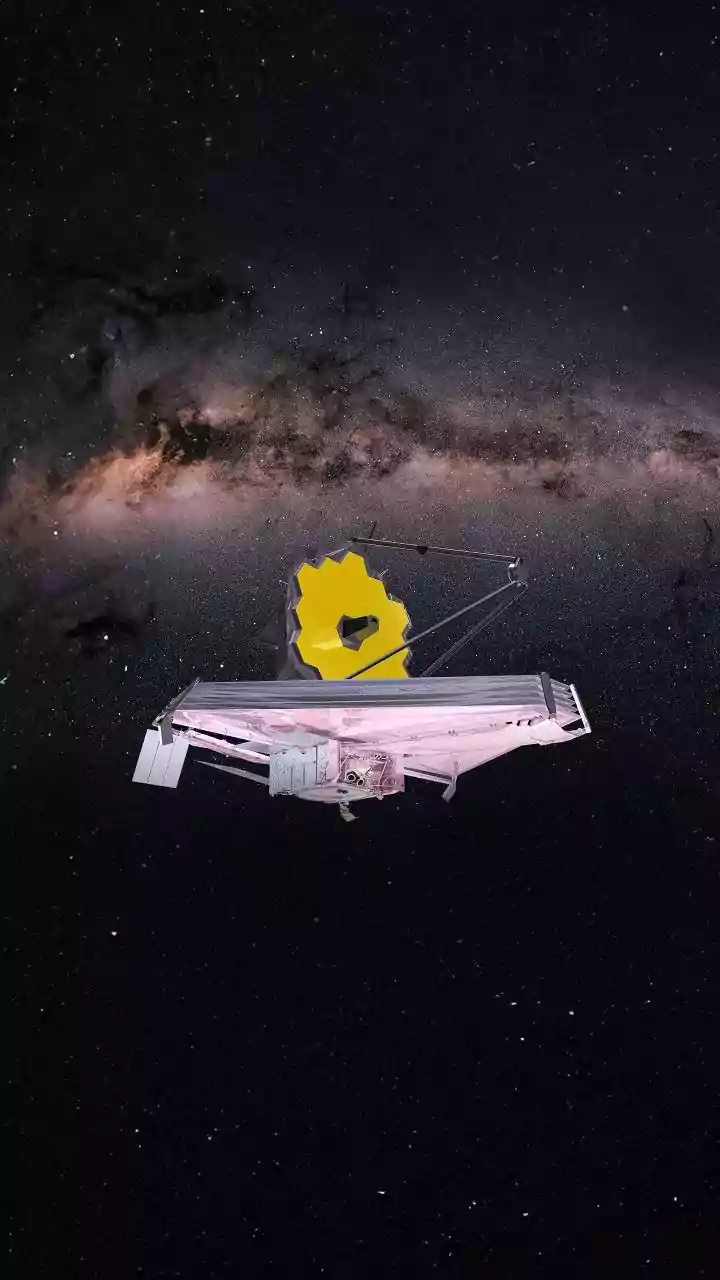
The latest evidence comes from a combination of powerful telescopes, including the James Webb Space Telescope (JWST), which can peer into the universe in infrared light. Following up on a powerful gamma-ray burst (GRB) — an initial flash of high-energy light that signals a major cosmic event — scientists pointed the JWST towards the suspected location. There, they found a faint infrared glow that has persisted long after the initial explosion faded. This afterglow is consistent with the radioactive decay of heavy elements blasted into space by the kilonova. In one landmark case involving a burst named GRB 230307A, the JWST detected the clear signature of tellurium, an element rarer than platinum on Earth, confirming that these mergers are indeed cosmic forges. While the current finding is still considered a candidate and requires more observation to be fully confirmed, it aligns perfectly with what theoretical models predict for a kilonova remnant.
Cosmic Factories for Gold
So, why does finding the ghost of a star crash matter? The answer may be hanging on your finger or powering your phone. While stars like our Sun can create lighter elements like carbon and oxygen through nuclear fusion, they lack the energy to produce the heaviest elements in the periodic table. To forge gold, platinum, uranium, and others, you need an environment with an extreme density of neutrons — a process known as rapid neutron capture, or the 'r-process'. Kilonova explosions are one of the only places in the universe where these conditions are met. The material ejected from these mergers seeds the surrounding space with heavy elements, which eventually get incorporated into new stars, planets, and, ultimately, everything on them. Every piece of gold jewelry on Earth was likely created in the unfathomable violence of a neutron star collision billions of years ago.
The Scientific Detective Work
Pinpointing a kilonova is a monumental feat of cosmic detective work. It begins with observatories like NASA's Fermi Gamma-ray Space Telescope, which scan the sky for the initial, fleeting burst of gamma rays. Once a GRB is detected, alerts are sent out to astronomers worldwide, who scramble to point other telescopes at that patch of sky. In the case of GRB 230307A, the initial flash was the second-brightest ever seen. Follow-up observations with telescopes like the Hubble and JWST then hunt for the fading light of the kilonova itself. Sometimes, these events happen in unexpected places. One recent discovery found a neutron star collision in a tiny galaxy embedded within a huge stream of gas, suggesting these mergers can occur far from the bright centers of large galaxies. This particular pair of neutron stars may have even been 'kicked out' of their home galaxy before merging hundreds of millions of years later.