
A Puzzle of Missing Miniatures
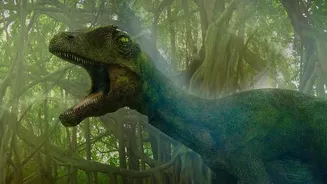
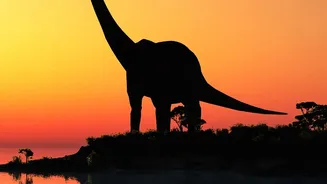
For over 150 million years, dinosaurs dominated every corner of the Earth, evolving into an incredible array of shapes and sizes. We know of towering plant-eaters and fearsome predators. Yet, for all their success, there's a strange gap in the fossil
record. The smallest known non-avian dinosaurs were roughly the size of a rabbit, weighing about 400 grams. This is bizarre because in almost every other animal group, from mammals to reptiles, the smallest species are often the most numerous. So, where are all the mouse-sized dinosaurs? For years, scientists wondered if it was simply a gap in our fossil collection or a quirk of dinosaur biology. Now, a new study published in the journal Evolution suggests the answer is something else entirely: competition.
The Old Explanation Falls Short
Previously, scientists tried to explain the absence of tiny dinosaurs using biological and energetic models. These models work on a trade-off: small animals are efficient at gathering food relative to their size, while large animals are more efficient at converting energy into offspring. Somewhere in the middle lies an optimal body size. These models work remarkably well for predicting the common body sizes of modern mammals and birds. But when applied to dinosaurs, they consistently failed. The models predicted that there should have been plenty of dinosaurs in the 100- to 300-gram range, but the fossil evidence shows they simply weren't there. This persistent discrepancy suggested that some external force, not just internal biology, was keeping dinosaurs from shrinking.
Enter the Competition: Early Mammals
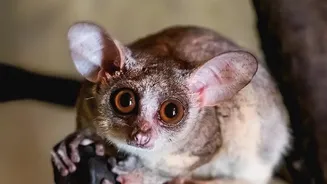
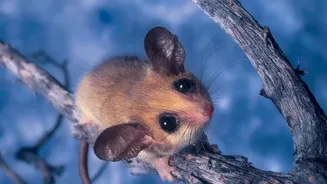
The new study proposes a fascinating theory: dinosaurs couldn't get small because the roles for tiny creatures were already taken. During the Mesozoic Era, while dinosaurs ruled the day as large and medium-sized animals, our own distant ancestors—small, often nocturnal mammals—were thriving in the undergrowth. These early mammals, many no larger than a shrew, likely dominated the ecological niches for small, insect-eating and seed-eating animals. This intense competition may have created an evolutionary barrier. Any dinosaur lineage that started to shrink would have found itself competing with highly adapted, established small mammals for food and resources, effectively getting pushed out. In a fascinating turn, just as giant dinosaurs prevented mammals from evolving to large sizes, it seems mammals may have prevented dinosaurs from evolving to small sizes.
The Exception That Proves the Rule
This theory also helps explain one of the greatest success stories in evolution: the origin of birds. Birds are the direct descendants of dinosaurs, and they broke the 'size barrier' with spectacular success. The average bird today is tiny compared to its non-avian ancestors. The new research suggests that the evolution of flight was the key that unlocked this potential. By taking to the air, early birds escaped the ground-level competition with mammals and entered a completely new set of ecological niches. This new frontier allowed them to undergo rapid miniaturization, leading to the vast diversity of small birds we see today, from tiny hummingbirds to sparrows. Flight gave one dinosaur lineage an escape route into a size range the rest of their relatives could never reach.