





Choose a Healthy Parent Plant
Success begins with selecting the right source. Always take cuttings from a healthy, vigorous plant that is free from pests and disease. Look for a plant that is actively growing, which is typically during the spring and summer months. Cuttings from stressed
or unhealthy plants are less likely to root successfully. You want to choose a stem that has new growth but is not too old and woody, nor too young and flimsy. This is often called a 'softwood' or 'semi-hardwood' cutting. Plants like pothos, philodendron, coleus, and many succulents are famously easy to propagate, making them excellent choices for beginners.
Make the Perfect Cut
Using a clean, sharp knife or pair of pruning shears is crucial to avoid crushing the stem tissue and introducing bacteria. You’ll want to cut a piece of stem that is between 4 and 6 inches long. The ideal cutting will have at least two or three nodes — these are the small bumps on the stem where leaves and buds emerge. Make your cut just below a node, as this is where the highest concentration of rooting cells is located. Taking a cutting from the growing tip of a branch is a common method, but sections from further down the stem can also work well.
Prepare the Cutting for Rooting
Once you have your cutting, a little preparation will significantly increase its chances of survival. Carefully remove the leaves from the lower one-third to one-half of the stem. No leaves should be below the surface of your rooting medium, as they will rot. If the cutting has any flowers or flower buds, remove them. This ensures the plant's energy is directed toward producing new roots instead of trying to sustain flowers. Some gardeners also choose to dip the bottom inch of the cutting into a rooting hormone powder or gel. While not always necessary for easy-to-root plants, it can speed up the process and improve success rates for more difficult species.
Select a Rooting Medium
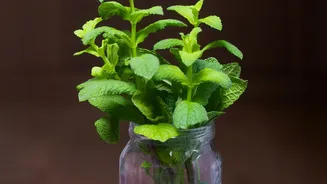
You have two primary options for encouraging roots: water or a solid medium. Rooting in a glass of water is simple and allows you to watch the roots grow. Just ensure at least one node is submerged and change the water every few days to keep it fresh. However, cuttings started in a solid medium often develop stronger root systems that transition to soil more easily. A sterile, soilless mix is ideal because it provides moisture without becoming waterlogged. Popular choices include a mix of peat moss and perlite, vermiculite, or even coarse sand. The medium should be moist but not saturated.
Create a Humid, Bright Environment
Until it grows roots, a cutting has no way to replenish the moisture it loses through its leaves. To prevent it from drying out, you need to create a humid environment. You can achieve this by placing a clear plastic bag over the pot, secured with a twist tie, creating a mini greenhouse. Be sure the bag doesn't touch the leaves, which can cause them to rot. Place the cutting in a warm spot with bright, indirect light. Direct sunlight can be too intense and scorch the delicate cutting. A consistent temperature around 21-24°C is optimal for root development.
Potting Your New Plant
Patience is key. Most cuttings will begin to form roots in about 3 to 6 weeks. You can check for root growth by gently tugging on the cutting; if you feel resistance, roots have likely formed. For cuttings in water, wait until the roots are at least an inch long before transplanting. Once your cutting has a healthy root system, you can pot it into a small container with regular potting soil. Water it well and continue to keep it in bright, indirect light as it adjusts to its new home. In a few weeks, it will be a well-established, independent plant, ready to thrive in your collection.