



What Is Happening to the Glaciers?
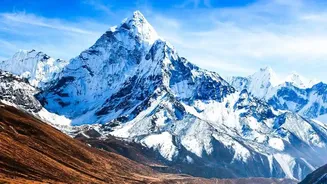
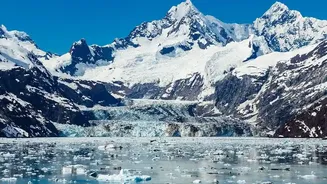
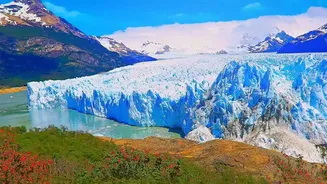
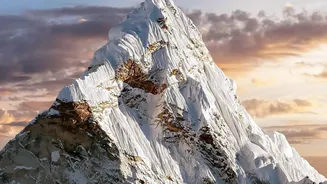
The core of the problem lies in rising temperatures. According to reports from the International Centre for Integrated Mountain Development (ICIMOD) in early 2026, glaciers across the Hindu Kush Himalaya region are melting at an alarming pace, with the rate of ice
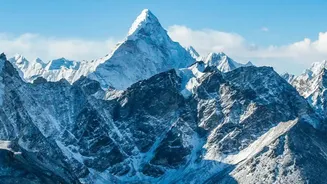
loss doubling since the year 2000. These glaciers, which act as a vital water source for nearly two billion people, have lost significant ice thickness since the 1970s. The Himalayas are warming at a rate almost twice the global average, causing the ice that has been stable for centuries to retreat and thin rapidly. This rapid melt not only affects long-term water supply but also creates immediate and dangerous physical hazards.
The Menace of Glacial Lake Outburst Floods (GLOFs)
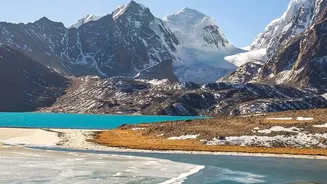
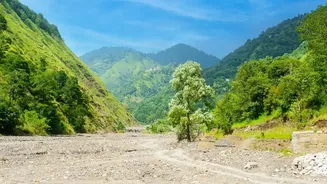
One of the most significant threats emerging from melting glaciers is the formation of dangerous glacial lakes. As a glacier recedes, meltwater often pools behind natural dams made of loose rock and debris (moraine). These lakes can grow to enormous sizes. A Glacial Lake Outburst Flood, or GLOF, occurs when this natural dam fails. The breach releases a sudden, massive torrent of water, mud, and boulders that can devastate downstream valleys with unimaginable force. In Nepal, which has over 2,000 glacial lakes, authorities have identified dozens as potentially dangerous. A recent study identified 47 high-risk glacial lakes across Nepal, China, and India, all connected to major river systems. These events can happen with very little warning, leaving communities with minimal time to react.
More Than Just Floods: Landslides and Cascading Disasters
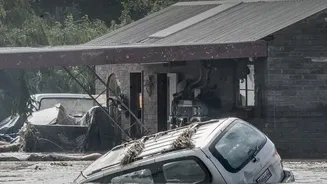
The danger isn't limited to GLOFs. The warming temperatures also thaw permafrost—the frozen soil and rock that acts as a 'cryospheric glue' holding mountain slopes together. As this glue weakens, entire mountainsides become less stable, dramatically increasing the risk of catastrophic landslides. Sometimes, these events happen together in a terrifying sequence known as a cascading disaster. A massive landslide, potentially involving a collapsing chunk of a glacier, can crash into a valley, block a river, and create a temporary dam. When that dam eventually bursts, it triggers a devastating flood downstream, multiplying the destruction. A catastrophic event in Nepal in August 2026 was triggered by a massive ice-rock avalanche, which then caused a devastating flood.
Why This Is India's Concern Too
The Himalayas do not respect international borders. The rivers that are lifelines for northern India—like the Ganga and its tributaries—originate from these very glaciers. A GLOF or major flood event in Nepal's Koshi, Gandaki, or Karnali river basins can lead to severe trans-boundary floods in Indian states like Bihar and Uttar Pradesh. Following the recent disaster in Nepal, Indian authorities placed National Disaster Response Force (NDRF) teams on alert in border areas, anticipating downstream impacts. Furthermore, the Indian Himalayas face the exact same vulnerabilities. Estimates suggest there could be around 900 unstable glaciers across the Indian Himalayas, with very few being systematically monitored. Disasters like the one in Chamoli, Uttarakhand, in 2021 serve as a stark reminder that the same forces are at play in our own backyard.
What Are the Next Steps?
Experts agree that the situation demands urgent action on two fronts. Firstly, there is a critical need for expanded monitoring and the creation of effective early warning systems. While technically challenging in remote, high-altitude regions, successful evacuations in other parts of the world have shown that warnings can save lives. Secondly, it highlights the larger, global challenge of climate change. The instability is a direct consequence of a warming planet. In the long term, reducing global emissions is the only way to slow the melt. For now, regional cooperation on data sharing, risk assessment, and disaster preparedness between countries like Nepal, India, and China is paramount to mitigating the immediate danger faced by millions living in the shadow of the world's highest peaks.