








What Is Earth's Energy Budget?
Think of Earth's climate as a massive, solar-powered engine. Energy from the sun constantly streams in, warming the land, oceans, and atmosphere. To maintain a stable temperature, Earth must radiate an equal amount of energy back out into space. This
balance between incoming solar radiation and outgoing thermal radiation is known as Earth's energy budget. The tropics absorb a surplus of heat, which the atmosphere and oceans transport toward the poles. The polar regions, in turn, act as giant radiators, releasing this energy into space, largely in the form of far-infrared radiation—a type of light invisible to the human eye. For decades, this specific part of the energy spectrum has been a major blind spot for scientists, as it had never been systematically measured.
NASA's New View of the Poles
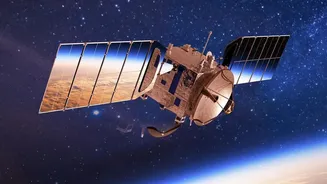
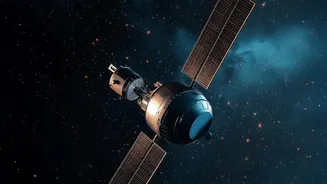
To fill this critical knowledge gap, NASA launched the Polar Radiant Energy in the Far-InfraRed Experiment (PREFIRE) mission. Consisting of two shoebox-sized satellites, called CubeSats, the mission was designed to precisely measure the far-infrared energy radiating from the Arctic and Antarctic. Launched in the spring of 2024, the twin spacecraft began collecting science data in July of that year. They have now provided a continuous two-year record, capturing two complete seasonal cycles at each pole. This data is revolutionary because far-infrared radiation accounts for nearly 60 percent of the energy Earth loses to space. By making this invisible process visible, PREFIRE gives scientists a powerful new tool to understand how the poles regulate our planet's temperature.
A Tale of Two Poles
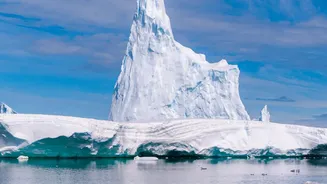
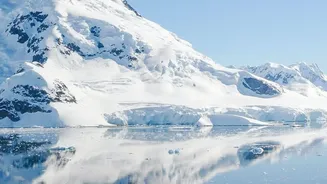
One of the most crucial insights from climate science is that the Arctic and Antarctic do not respond to change in the same way. Their fundamental geography is a key reason. The Arctic is an ocean surrounded by land, while the Antarctic is a massive land continent, covered in a thick ice cap and surrounded by the Southern Ocean. This geographical difference drives vastly different seasonal swings. In the Arctic summer, thawing occurs across tundra and sea ice, whereas much of Antarctica remains below freezing year-round. This contributes to a phenomenon known as Arctic amplification, where the North Pole is warming at a rate two to four times faster than the global average. The loss of bright, reflective sea ice in the Arctic exposes the dark ocean below, which absorbs more solar energy, creating a feedback loop that accelerates warming. The Antarctic's response has been more muted and complex.
Why This New Data Matters
The PREFIRE data isn't just about understanding the poles; it's about improving the climate models that forecast our future. These models are sophisticated computer simulations that rely on accurate measurements of how energy moves through the Earth system. With detailed information on how different surfaces—like snow, sea ice, and open water—emit heat, scientists can fine-tune these models. For instance, the PREFIRE mission has already revealed that different types of ice can vary in how much far-infrared radiation they release. Better models lead to more reliable predictions about everything from weather patterns and storm intensity to the stability of ice sheets and future sea-level rise. This has direct implications for shipping routes, national defense operations in the Arctic, and communities living in high-latitude regions.
The Ripple Effect on Global Climate
What happens at the poles does not stay at the poles. The temperature difference between the frigid polar regions and the warm tropics is a primary driver of the jet stream, the high-altitude winds that steer weather systems across the globe. As the Arctic warms faster than the rest of the planet—a trend the PREFIRE data will help quantify—this temperature gradient weakens. A weaker, wavier jet stream can lead to more extreme and persistent weather events in the mid-latitudes, such as prolonged cold snaps, heatwaves, and stalled storms. By providing a more accurate accounting of the polar energy budget, the PREFIRE mission offers crucial insights into the stability of these global climate patterns and how they might shift in a warming world.