
The Phased Trial Strategy
Authorities are not planning a single, full-corridor trial run from day one. Instead, the strategy is a phased rollout, focusing on sections where construction is most advanced. According to recent statements from Railway Minister Ashwini Vaishnaw, the first
trials are expected to take place in May or June of 2027. This approach allows for rigorous testing and validation on a smaller scale before expanding services. The initial focus will be on the Gujarat portion of the route, where land acquisition and civil construction have progressed most rapidly. Following a successful testing period of two to four months, the first commercial services are expected to launch. This ensures that by the time passengers board, the system has been thoroughly vetted.
The All-Important First Section
The first stretch slated for operation is the section between Surat and Bilimora in Gujarat. This segment is part of the larger Vapi-Surat and Vapi-Ahmedabad sections that will be commissioned sequentially. As of late 2026, significant progress has been made on the Gujarat portion of the 508-kilometre corridor. Civil works on the Surat-Vapi section are complete, and track-laying work is advancing quickly. This preparation is crucial for the 2027 trials, as it provides the physical infrastructure needed to test the trains at high speeds. The commissioning of this first section is currently targeted for August 2027, marking the official start of bullet train services in India.
What Exactly Will Be Tested?
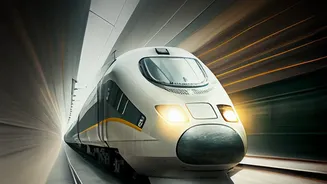
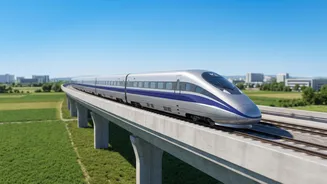
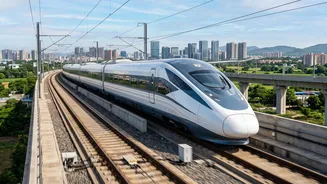
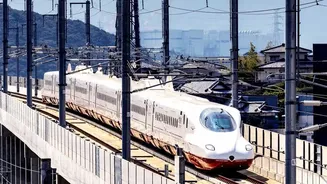
The 2027 trials are about more than just speed. The National High Speed Rail Corporation Limited (NHSRCL), the agency implementing the project, will conduct comprehensive tests on multiple systems. This includes the rolling stock itself—the indigenously developed trainsets based on Japan's Shinkansen technology. The first body frame has already undergone 'squeeze testing' to verify its structural integrity. Furthermore, the trials will validate the advanced signalling and train control systems, the 2x25 kV overhead electrification system, and the Japanese J-Slab ballastless track technology, which is being used for the first time in India. Safety protocols, including the earthquake detection system, will also be a core part of the testing regime.
The Indigenous Push and Japanese Tech
While the project is a collaboration with Japan, a key aspect of the plan involves fostering domestic manufacturing capabilities. The first prototype trainsets are being manufactured in India by BEML Limited under a 'Make in India' initiative, with a designed operating speed of 280 kmph. These trains will be tested extensively before being cleared for passenger service. The project leverages proven Shinkansen technology, known for its impeccable safety and reliability record, but adapts it for Indian conditions. The goal is to create a blueprint that can be replicated for seven other planned high-speed rail corridors across the country, making the Mumbai-Ahmedabad project a foundational learning experience for India.
Navigating the Final Hurdles
While the 2027 trial date is the firm target, some challenges remain. The project has faced delays due to the pandemic and complex land acquisition, particularly in Maharashtra. Although over 100 km of pier work is complete in the state, progress has been slower than in Gujarat. The final leg includes India's first undersea rail tunnel near Mumbai, a significant engineering feat. Additionally, the project cost has seen escalations, partly due to disputes over land compensation. Authorities are working to resolve these issues to ensure the full corridor, from Mumbai's Bandra Kurla Complex to Sabarmati, is completed, with the current official timeline aiming for final completion by 2029.