







The Himalayas, a source of life-giving rivers and spiritual solace, are becoming increasingly dangerous. As climate change accelerates, new and complex hazards are emerging, prompting scientists to issue a stark warning for the region.
A Region on High Alert
The majestic Himalayan
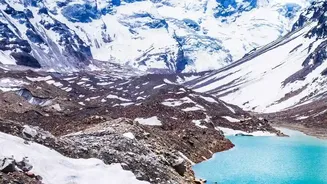
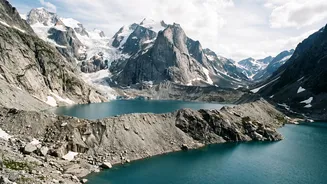
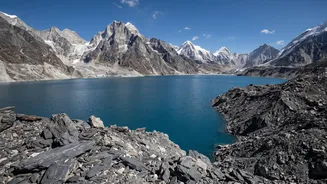
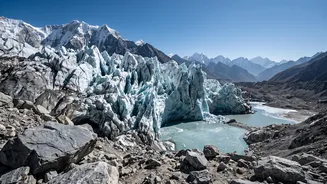
range, often called the 'Third Pole', is warming at a rate nearly twice the global average. This accelerated warming is destabilising the fragile ecosystem, leading to a surge in natural disasters. Recent studies and events underscore a disturbing trend: hazards are not only more frequent but also more complex and unpredictable. A recent study published in January 2026 warned that the risks of Glacial Lake Outburst Floods (GLOFs) are poorly assessed and monitored, leaving nearly one million people downstream in peril. The number of glacial lakes has increased by over 50% since 1990, amplifying the threat. These events, like the devastating floods in Sikkim in 2023 and Chamoli in 2021, are no longer isolated incidents but part of a larger, more dangerous pattern of cascading disasters, where one event triggers another. Experts argue that our understanding and preparedness have not kept pace with these rapidly evolving threats.
The Compounding Dangers of GLOFs and Landslides
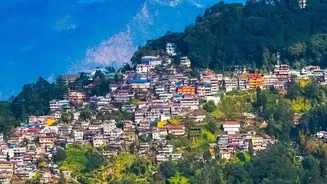
Two of the most significant threats are Glacial Lake Outburst Floods (GLOFs) and landslides. GLOFs occur when natural dams, formed by ice or rock debris, collapse and release a torrent of water. These events are catastrophic because they happen with little warning, unleashing flash floods carrying boulders and sediment that destroy everything in their path. The 2013 Uttarakhand disaster, which killed nearly 5,000 people, was triggered by the failure of the Chorabari glacial lake. Meanwhile, landslides are also on the rise. A study by the Wadia Institute of Himalayan Geology found that 15% of Mussoorie is in a high-risk landslide zone, a problem exacerbated by unsustainable construction and slope cutting. These hazards are becoming more intertwined; thawing permafrost and erratic rainfall destabilise slopes, increasing the risk of landslides that can fall into glacial lakes, triggering a GLOF.
The Critical Gap in Early Warnings
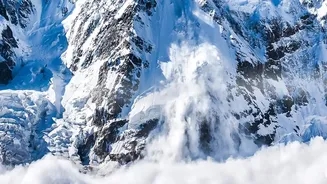
Despite the growing danger, a critical gap exists in our ability to provide timely and effective warnings. Many existing systems are designed for specific, predictable hazards like seasonal river floods, but they are ill-equipped to handle the sudden, complex, and cascading disasters now emerging. The recent disaster in Nepal in August 2026, where a massive rock-ice avalanche triggered a flood that killed over 1,400 people, highlighted this failure. The event unfolded so rapidly that conventional river-level sensors were useless, and by the time an alert was sent, it was too late. The challenges are immense. The remote, rugged terrain makes it difficult to install and maintain monitoring equipment. Furthermore, there are significant data gaps, poor connectivity in many valleys, and a lack of coordination between the various agencies responsible for disaster management. For transboundary rivers, the lack of real-time data sharing with neighbouring countries like China leaves downstream Indian communities blind to upstream threats.
The Path Forward: A Multi-Layered Defence
Experts are calling for a fundamental shift in approach, moving beyond simple forecasts to a multi_layered system of defence. This involves building a 'cascade_aware' early warning system that integrates data from multiple sources. The recommendation is to combine high_resolution satellite imagery and seismic monitors to detect unstable slopes with ground_based sensors tracking lake water levels, rainfall, and seismic activity. India has made some progress. The country's first GLOF early warning system was recently installed at Ghepan Ghat glacial lake in Himachal Pradesh, featuring a suite of sensors that transmit data in near real_time. Projects under the National Disaster Management Authority (NDMA) are also aiming to expand this network. However, technology alone is not a silver bullet. Experts stress that land_use planning must be re_evaluated to prevent construction in high_risk zones. Most importantly, these systems must ensure 'last_mile connectivity', empowering local communities—often the first responders—with clear, actionable warnings through everything from mobile alerts to local volunteers and panchayats.