


What's the Current Progress?
As of late 2026, the Mumbai-Ahmedabad High-Speed Rail (MAHSR) project is a tale of two distinct speeds. In Gujarat, progress is visibly rapid. Construction of the civil works for the Vapi-Surat section is expected to finish by December 2026. Across the state,
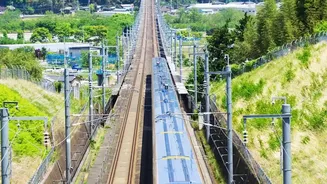
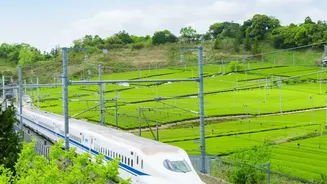
hundreds of kilometers of viaducts — the elevated tracks upon which the train will run — are complete, and work on stations in Surat, Anand, and Ahmedabad is in advanced stages. In Maharashtra, after significant delays primarily due to land acquisition challenges, the pace has picked up considerably. Foundation work is progressing at stations like Thane and Virar, while the complex underground work for the terminus at Mumbai's Bandra-Kurla Complex (BKC) is also well underway. The project is no longer just about civil construction; track laying and the installation of overhead electrical equipment are now happening simultaneously in the more advanced sections.
So, When Can You Actually Ride It?
This is the million-rupee question. The original deadlines have long passed, but a clearer, phased timeline has emerged. The government is targeting the first run of the bullet train in August 2027 on a priority section in Gujarat, likely between Surat and Bilimora. Officials are aiming to have this initial stretch ready for service to mark a major milestone. From there, the service will be extended in phases. Railway Minister Ashwini Vaishnaw has indicated that after the first run, the line will be extended as new sections of the track are completed. However, the completion of the full 508-kilometer corridor from Mumbai to Ahmedabad is a different story. While a 2027 launch for the first leg looks increasingly likely, official timelines suggest the entire project, including the challenging undersea tunnel near Thane Creek, might only be fully operational by 2029 or 2030.
The Big Question: What's the Cost?
Infrastructure projects of this scale are rarely cheap, and the bullet train is no exception. The project's initial estimated cost back in 2017 was around ₹1.1 lakh crore. However, due to delays, inflation, and design changes, that number has escalated significantly. Recent reports in August 2026, citing proposals sent for Cabinet approval, place the revised cost at approximately ₹2.1 lakh crore, nearly double the original estimate. A significant portion of the project is funded by a soft loan from the Japan International Cooperation Agency (JICA). Officials have argued that despite the increase, the per-kilometer cost of India's corridor remains lower than that of comparable high-speed rail projects in other countries. The cost escalation has been attributed mainly to the past delays in land acquisition in Maharashtra and procurement timelines.
A 'Make in India' Shift
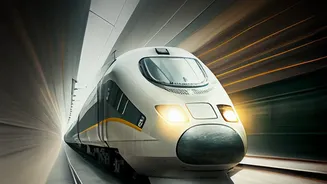
A notable evolution in the project is the increasing emphasis on domestic manufacturing. While the core Shinkansen technology is Japanese, a major push is underway to build the trains themselves in India. State-owned BEML Limited has been awarded a contract to design and manufacture prototype bullet train sets. The first body frame of an indigenous train was recently completed and sent for testing. The plan is for these India-made trains, designed to operate at speeds of up to 280-320 kmph, to begin track testing by mid-2027. This 'Atmanirbhar Bharat' approach extends beyond the rolling stock to include signaling systems and other components, which is expected to lower costs and build a domestic ecosystem for future high-speed rail projects.