



A Celestial Photobomb
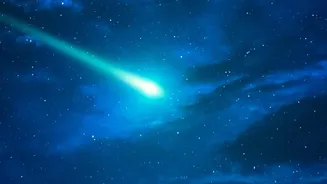
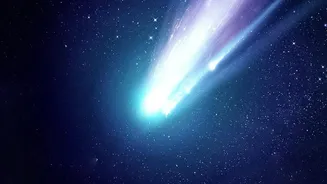
NASA's Astronomy Picture of the Day for August 3, 2026, showcased a brilliant meteor streaking through the sky, coincidentally photobombing a long-exposure image of the Lacerta Nebula. Captured from Nevada, the image perfectly illustrates the fleeting,
intense event that occurs when a piece of space debris, likely no bigger than a pebble, enters our world. While a beautiful sight, the streak of light is the visible evidence of a violent encounter with Earth's atmosphere, a process that generates incredible heat and light. The timing of this image is perfect, as August is a prime month for meteor watching, thanks to several active showers, most notably the Perseids.
It's Not Friction, It's Compression
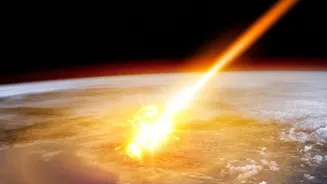
Many of us learned that meteors burn up due to air friction, but that's a common misconception. The real cause of the intense heat is a phenomenon called ram pressure. As a meteoroid plummets into the atmosphere at hypersonic speeds—often tens of thousands of kilometers per hour—it rapidly compresses the air in its path. When a gas is compressed that quickly, its temperature skyrockets, reaching thousands of degrees. This superheated pocket of air in front of the meteor is what causes the object to glow and vaporize, a process called ablation. The light we see is not the rock burning like a piece of wood, but rather the glowing, ionized gas of the compressed atmosphere and the vaporized material from the meteoroid itself.
From Rock to Radiance
Before it becomes a meteor, the object is a meteoroid—a piece of rock or ice traveling through the vacuum of space. When it hits the atmosphere, the immense pressure and heat create a shock wave. The heat is so extreme that it can melt and vaporize the outer layers of the meteoroid, stripping atoms away and creating a trail of glowing gas and dust. The different colors sometimes visible in a meteor’s trail can even give scientists clues about its chemical composition. Most of these celestial visitors are tiny and disintegrate completely, becoming the beautiful, harmless shooting stars we wish upon. They typically become visible at an altitude of around 96 kilometers (60 miles) and burn out long before reaching the ground.
Fireballs and Exploding Bolides
Not all meteors are created equal. While most are faint streaks, some are exceptionally bright and are known as fireballs. A fireball is generally defined as any meteor that appears brighter than the planet Venus in the night sky. An even more dramatic event is a bolide, which is a very large, bright fireball that often explodes in the atmosphere in a brilliant terminal flash. These explosions happen when superheated air is forced into cracks in the meteoroid, causing it to detonate under the immense pressure of its own speed. These are the events that can sometimes be heard from the ground and, in rare cases, can be powerful enough to create a shockwave felt by people below.
A Prime Time for Skywatching
The appearance of NASA's August 3rd image serves as a timely reminder that we are entering a fantastic period for skywatching. The Perseid meteor shower, one of the best of the year, is active from mid-July to late August. It is expected to peak on the night of August 12-13, 2026. This year's peak is particularly promising because it coincides with a new moon, meaning the skies will be dark and ideal for viewing. The Perseids are particles left behind by the comet Swift-Tuttle. As Earth passes through this stream of debris, we are treated to a celestial light show, a wonderful opportunity to witness the physics of atmospheric entry firsthand.