



The Foundation: Scale and Proportion
Before you bring home that giant blanket, it’s crucial to understand two key design concepts: scale and proportion. Scale refers to how the size of an object relates to the room it’s in. A massive sectional sofa, for example, is out of scale in a tiny
apartment. Proportion, on the other hand, is about how different objects in a room relate to each other. A well-proportioned room feels harmonious because its elements are balanced. A coffee table that is two-thirds the length of the sofa it faces is a good example of proper proportion. When working with oversized textiles, your goal is to use their size to your advantage by ensuring they are scaled correctly to the room and proportioned well with the furniture around them.
The Area Rug: Defining, Not Drowning
One of the most common design mistakes is choosing an area rug that’s too small, making the room feel disjointed. An oversized rug can beautifully anchor a seating area, but it needs to be the right kind of big. The golden rule is that at least the front legs of your major furniture pieces, like sofas and chairs, should sit comfortably on the rug. This connects the furniture and makes the entire arrangement feel cohesive. In a dining room, the rug should be large enough that when you pull a chair out to sit down, its legs remain on the rug. For the best effect, aim to leave about 8 to 12 inches of bare floor around the rug's perimeter, which frames the space without making it feel cramped.
Curtains: Creating an Illusion of Height
When it comes to curtains, “oversized” refers more to the impression they create than the fabric itself. Heavy fabrics can weigh a room down, but when hung correctly, even substantial drapes can make a room feel larger. The trick is to hang the curtain rod high and wide. Mounting the rod 4 to 6 inches above the window frame, or even just below the ceiling, draws the eye upward and creates the illusion of height. Extending the rod at least 3 inches past the frame on each side allows the curtains to stack off the window when open, maximizing natural light. Floor-length panels are almost always the best choice, as short curtains can visually chop the wall in half and make the room feel smaller. Matching the curtain colour to the wall colour can further enhance this effect by creating a seamless look.
Throws and Blankets: Cozy, Not Cluttered
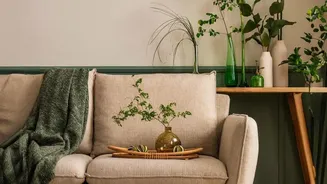
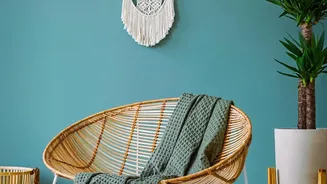
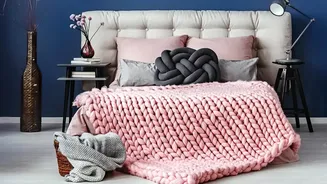
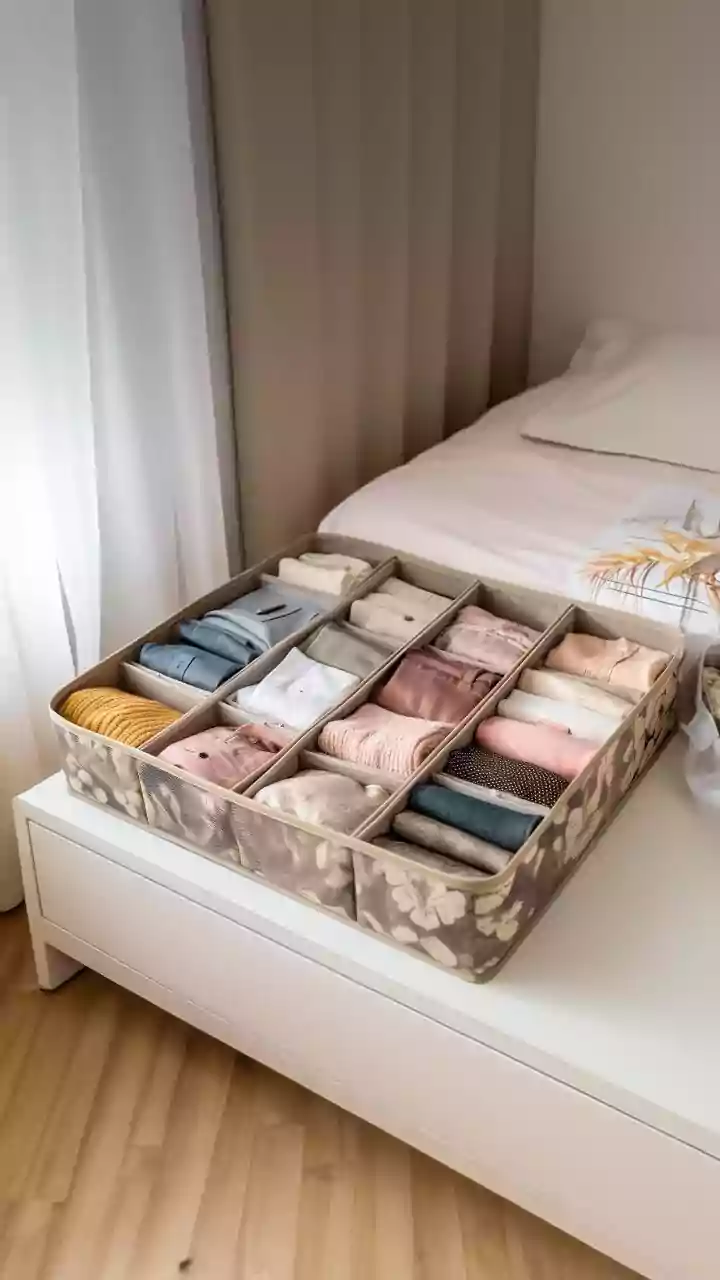
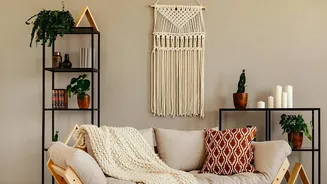
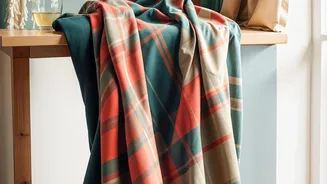
Chunky knit blankets are the epitome of cozy, but a large, thick throw can quickly look messy if not styled with intention. Instead of a perfect, neat fold, aim for an effortless drape. Tossing a blanket diagonally across the corner of a bed or casually draping it over the arm of a sofa creates an inviting, lived-in feel without adding visual bulk. For a more structured look, you can fold the throw lengthwise and lay it neatly across the foot of the bed or the back of a sofa. The key is balance; a giant, fluffy blanket works best in a room with other varied textures, like smooth leather or crisp linen, to prevent the space from feeling texturally one-note. Consider storing extra throws in a large woven basket, which adds texture while keeping clutter at bay.
Working with Large-Scale Patterns
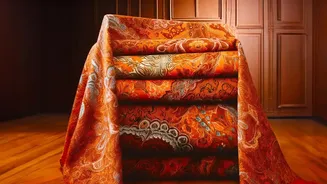
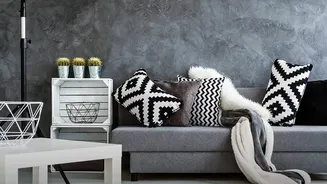
Large-scale patterns on upholstery, pillows, or even a single accent wall can add incredible personality and drama to a room. Contrary to popular belief, a large pattern can even work in a small space by creating depth and a strong focal point. The key to success is balance. When you use a large-scale pattern, treat it as the star of the show and support it with smaller patterns and solid colours. A helpful guideline is the 60-30-10 rule: let your dominant colour or solid neutral fill 60% of the space, your secondary texture or small-scale pattern take up 30%, and your bold, large-scale pattern serve as the 10% accent. This ensures the pattern makes an impact without overwhelming your senses.