


Defining the Northern Corridors
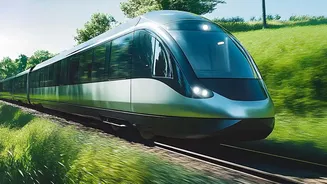
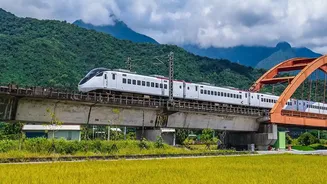
The term 'North Bullet Train Corridor' doesn't refer to a single project but primarily to two major proposed routes managed by the National High Speed Rail Corporation Limited (NHSRCL). The first is the Delhi-Varanasi High-Speed Rail (DVHSR) corridor,
an approximately 813-km line planned to connect the national capital to Varanasi via key Uttar Pradesh cities like Agra, Lucknow, and Prayagraj. More recently, plans have been approved to extend this corridor through Bihar and West Bengal, all the way to Guwahati in Assam, creating a massive artery across North and Northeast India. The second key project is the Delhi-Amritsar High-Speed Rail corridor, a proposed 465-km line that would connect Delhi to Amritsar via cities in Haryana and Punjab, including a spur line to Chandigarh.
Revolutionary Speed and Estimated Times
The project's allure lies in its dramatic reduction of travel times, with trains designed to operate at speeds of 320-350 km/h. For the Delhi-Varanasi corridor, the journey is estimated to take just 3 hours and 33 minutes, a significant drop from the current 8-plus hours. Other stunning estimates on this route include Delhi to Agra in 59 minutes and Delhi to Lucknow in about 2 hours and 12 minutes. On the proposed Delhi-Amritsar line, the travel time could be cut to nearly two hours, transforming connectivity in Punjab. These estimates are based on the operational plans and technical specifications detailed in project reports, offering a glimpse into a future of rapid inter-city transit.
Why Estimates Precede a Timetable
The existence of journey estimates without a published schedule is standard for large-scale infrastructure projects in their planning stages. Both the Delhi-Varanasi and Delhi-Amritsar corridors are currently in the 'proposed' phase. The National High Speed Rail Corporation Limited (NHSRCL) has submitted Detailed Project Reports (DPRs) to the Ministry of Railways, which include route alignments, station locations, and technical feasibility studies. These DPRs allow for the calculation of estimated travel times. However, a final, public timetable can only be created after numerous other milestones are achieved, including final cabinet approval, land acquisition, financing arrangements, and the completion of construction, which is still several years away.
The Current Status and Hurdles Ahead
As of late 2026, these northern corridors remain proposals, not yet sanctioned for construction. The Delhi-Amritsar route, for instance, was not among the seven high-speed corridors announced in the Union Budget 2026-27. For the Delhi-Varanasi line, ground surveys and preliminary activities are progressing, with the DPR submitted for government review. The biggest challenges for any bullet train project in India are land acquisition, which can be a complex and lengthy process, and the immense financial investment required, estimated to be in lakhs of crores for the entire network. While the vision is clear, the path from proposal to operational reality involves navigating significant logistical and financial hurdles.
Part of a National High-Speed Vision
These northern routes are cornerstones of a broader national plan to create a 'Diamond Quadrilateral' of high-speed rail, connecting India's major metropolitan centres. The government has identified several high-priority corridors, including Mumbai-Ahmedabad (which is currently under construction), Chennai-Bengaluru, and others across the country. The strategy is to not only slash travel times but also to spur economic development, decongest highways and conventional railways, and promote a more sustainable mode of transport. The northern corridors, by connecting the capital to economic, political, and pilgrimage hubs, are crucial to this nationwide transformation of mobility.