





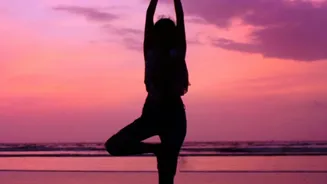
In the worlds of yoga and archery, success isn't just about physical strength or flexibility. It's about precision, focus, and a deep mind-body connection. One of the most powerful, yet unseen, tools in both disciplines is visualisation.
The Power of the Mind’s Eye
At its core, visualisation,
or mental imagery, is the practice of rehearsing an action in your mind before you physically perform it. The brain, remarkably, doesn't always distinguish between a vividly imagined experience and a real one. When you mentally simulate an action, your brain can stimulate the same neural pathways as it would during the actual event. This mental warm-up conditions the mind for a successful outcome, reducing performance anxiety by making the unknown feel familiar. Athletes and practitioners use it to refine technique, build confidence, and enhance muscle memory. It’s a technique that allows you to practice without ever moving a muscle, turning your mind into the ultimate training ground.
Archery: Visualising the Perfect Shot
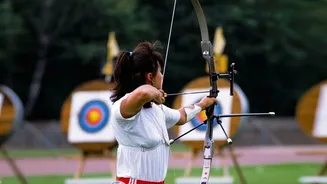
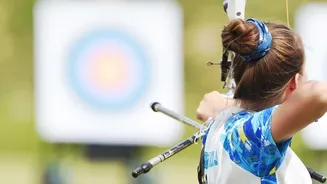
For an archer, the goal is singular and precise: to hit the target. Visualisation is a critical part of the pre-shot routine. Elite archers don’t just picture the arrow hitting the bullseye—that’s called 'outcome visualization'. While useful for motivation, sports psychologists find that 'process visualization' is even more effective for performance. This means the archer mentally rehearses the entire sequence in vivid detail: the feel of the ground beneath their feet, the sound of the bowstring, the tension in their back muscles as they draw, the anchor point, the clean release, and the arrow's perfect flight path. This detailed mental rehearsal helps make the complex sequence feel automatic, builds resilience against pressure, and can even help identify technical flaws in their form before they even pick up the bow.
Yoga: Envisioning Balance and Flow
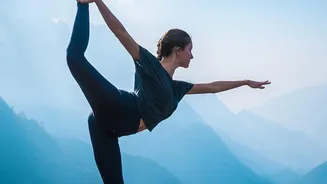
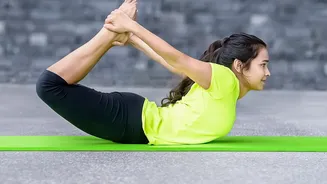
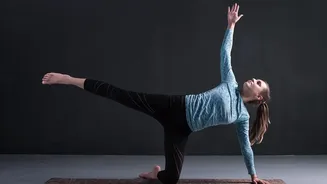
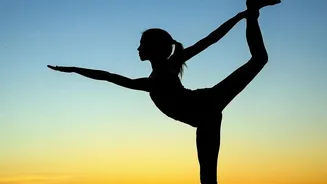
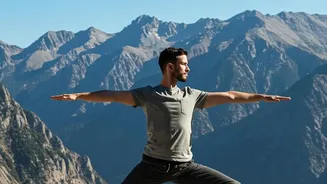
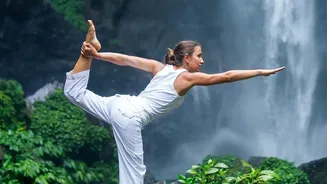
In yoga, visualisation is less about a single, explosive outcome and more about achieving a state of being—balance, stability, and mindful awareness. Here, the concept often manifests as 'drishti', which means 'gaze' or 'vision'. By fixing the gaze on a specific, unmoving point, a yogi can dramatically improve their balance in challenging poses like Tree Pose or Warrior III. But drishti is more than just a physical gaze; it’s a tool for drawing focus inward, quieting the mind's chatter, and promoting a state of moving meditation. Yogis also use visualisation to prepare for difficult postures, mentally mapping the movements and imagining the feeling of stability and ease in the final form. This internal vision helps align the body and calm the nervous system, making the pose more accessible.
Similar Goals, Different Paths
Though their applications differ, archers and yogis use visualisation to achieve the same fundamental goals: focus, control, and consistency. For the archer, it’s about external precision—controlling a sequence of movements to send an object to a specific target. The focus is sharp, targeted, and geared toward a successful outcome. For the yogi, it’s often about internal stability—controlling the mind and body to maintain a posture or flow through a sequence with grace. The focus is soft, sustained, and geared toward a state of inner awareness. An archer visualises a perfect action. A yogi visualises a perfect state of being. Both are using their mind to master their body, silencing external and internal distractions to perform at their best.
From the Mat to the Range
The mental skills honed in one practice can powerfully benefit the other. The mindfulness and breath control cultivated in yoga can help an archer remain calm and centred under the pressure of competition. A 2025 study found that an eightndweek yoga intervention significantly improved attention networks in competitive archers. Conversely, the goalndoriented , processdriven visualisation from archery can help a yogi tackle a challenging arm balance or inversion with a clearer plan of action. The archer’s practice of letting go of a bad shot and refocusing on the next one mirrors the yogi’s practice of leaving one pose behind to be fully present in any next.