





A Tricolour Floating in Space
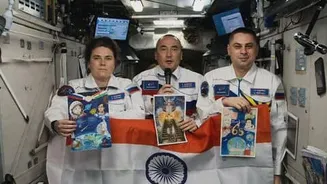
In a video message recorded aboard the ISS, Roscosmos cosmonauts Pyotr Dubrov, Anna Kikina, and Andrey Fedyaev extended personal greetings to the people of India. Holding the Indian flag as it floated in zero gravity, the crew wished the nation peace
and prosperity. “Dear friends, today the Republic of India is celebrating its 80th Independence Day,” Dubrov began, acknowledging the historic significance of the occasion. The message went beyond simple well wishes, connecting India's journey of self-reliance since breaking free from colonial rule with a shared legacy of exploration. Kikina, the only active female cosmonaut in Russia’s corps, quoted the first man in space, Yuri Gagarin, who after his 1961 flight described India as beautiful from above but “even more beautiful on Earth” because it was home to true friends.
A Partnership Written in the Stars
The cosmonauts' message served as a powerful reminder of the deep-rooted space cooperation between India and Russia. This partnership is not a recent development but a multi-decade relationship built on landmark achievements. The crew specifically referenced these milestones, celebrating a friendship that has been “time-tested.” The collaboration dates back to 1975, when the Soviet Union launched Aryabhata, India's very first satellite. It reached a symbolic peak in 1984 when Rakesh Sharma became the first Indian citizen in space by flying aboard the Soviet Soyuz T-11 mission. The video from the ISS also marked another significant anniversary: 2026 is 65 years since Yuri Gagarin’s historic first human spaceflight, an event that was followed by his celebrated visit to India, further cementing the bond between the two nations.
From Gagarin to Gaganyaan
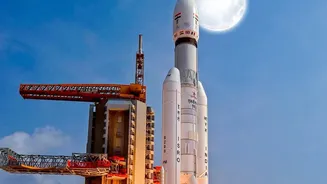
The message was not just about celebrating the past; it was a firm nod to the future. The cosmonauts highlighted that the India-Russia partnership has entered a “new phase” with India’s ambitious Gaganyaan human spaceflight programme. This mission, which aims to send Indian astronauts into orbit, relies partly on Russian expertise. The Indian astronaut-candidates, or ‘Gaganyatris’, have undergone training at Russia's Yuri Gagarin Cosmonaut Training Centre. By referencing the Gaganyaan programme, the cosmonauts underscored that the collaborative spirit is alive and well, evolving from mentorship to a partnership of equals. The message also featured posters showcasing Gagarin, Sharma, and the Gaganyaan mission, visually bridging the past, present, and future of this enduring alliance.
An Outpost of Cooperation
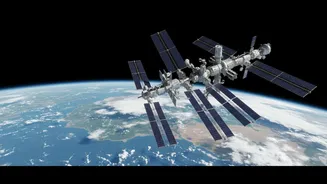
This gesture of friendship occurs within a complex global context. The International Space Station itself is a remarkable, and at times fragile, symbol of global cooperation. It has been continuously inhabited for over two decades, primarily managed by the United States and Russia. Despite significant geopolitical tensions on Earth, the day-to-day work of keeping the station running necessitates collaboration. Astronauts and cosmonauts depend on each other for survival, creating a unique bubble of diplomacy in low-Earth orbit. While Russia has discussed its eventual departure from the ISS to build its own station, recent agreements confirm joint operations will continue until at least 2028, with plans for a cooperative de-orbiting process around 2030. This makes the heartfelt message to India even more poignant—a clear signal of a valued relationship in a shifting world.