






A Strategic Shift in Education
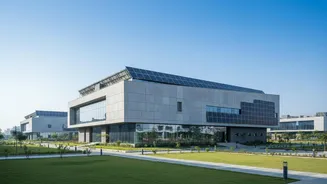
At the heart of IIT Madras's climate-focused efforts is its School of Sustainability, a major initiative designed to break down silos between academic departments. Launched to address the complex challenges of a warming world, its mission goes beyond
traditional teaching. The school aims to become a hub for interdisciplinary research, technology development, and policy advising. By bringing together experts from various fields, the institute is fostering a holistic environment where engineering, data science, and environmental policy intersect to create practical and scalable solutions for India and the global south. This move signals a strategic shift from isolated courses to building a comprehensive platform for climate action.
Putting AI and Data to Work
The most recent and direct example of 'applied computing' in action is the institute's focus on Artificial Intelligence (AI) and Machine Learning (ML). IIT Madras is hosting workshops like “AI in Action: Climate and Energy Systems Applications,” aimed at students, researchers, and industry professionals. These sessions provide hands-on training in using AI for critical tasks such as renewable energy forecasting, power grid optimization, and predictive maintenance for green infrastructure. Participants work with real-world datasets to understand how computational tools can model climate scenarios and help develop technology-based solutions, turning abstract data into actionable intelligence for India's energy transition.
Pathways to Becoming a Climate Expert
For those seeking a deeper, formal education, IIT Madras offers several pathways. The School of Sustainability provides a minor in the subject for all undergraduate students, sensitizing them to environmental challenges early on. For postgraduate students, there are more specialized routes, including an Interdisciplinary Dual Degree in Atmospheric and Climate Sciences, and M.Tech programs in Environmental Engineering or Hydraulics and Water Resources Engineering. These programs are designed to equip students with the advanced technical skills needed to tackle specific issues like water conservation, air quality management, and climate modeling.
Building India-Specific Solutions
A key part of the curriculum's strength lies in its connection to IIT Madras's own pioneering research. The institute is a leader in developing climate models tailored to the Indian subcontinent. Researchers there have developed the IITM Earth System Model (IITM-ESM), one of the first of its kind from India, which provides more reliable future projections for the Indian monsoon and regional climate. They have also pioneered methods like Reliability Ensemble Averaging (REA) to reduce uncertainty in regional climate forecasts, which is critical for a monsoon-dependent country. Students in these programs are therefore learning from and contributing to research that has direct, real-world applications for Indian agriculture, water security, and disaster management.
Who Can Get Involved?
The institute has created multiple entry points for aspiring climate professionals. Traditional full-time M.Tech programs typically require a qualifying score in the GATE exam. However, for working professionals who want to upskill without leaving their jobs, IIT Madras offers flexible, Web-Enabled M.Tech programs that can be completed at their own pace. Furthermore, the institute provides executive education certificate programs for mid-career professionals, focusing on sustainability frameworks and India's changing policy landscape. This multi-pronged approach ensures that whether you are a fresh graduate, a mid-career manager, or a seasoned researcher, there is a pathway to gain the skills needed to contribute to a sustainable future.