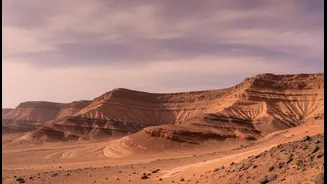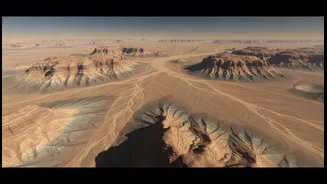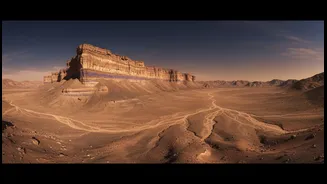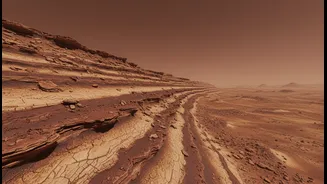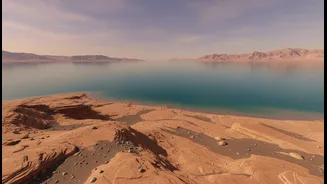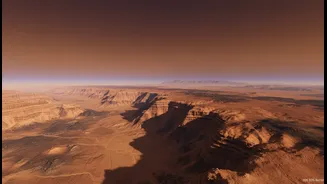





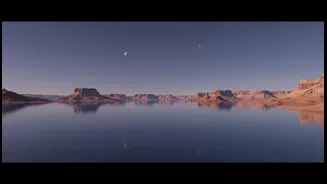
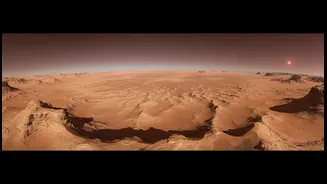
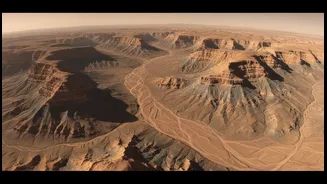


A 'Bathtub Ring' on Mars
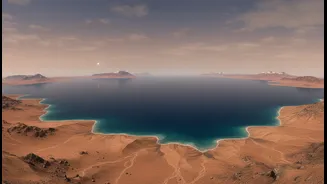
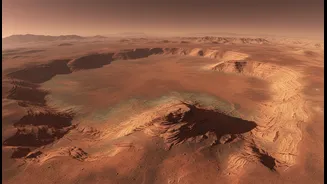
The long-running debate over an ancient Martian ocean has been reshaped by the discovery of a massive coastal shelf beneath the planet’s surface. Researchers analyzing topographic data from Mars orbiters identified a broad, flat band of land that wraps
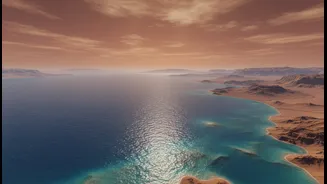
around the northern lowlands. This feature is strikingly similar to the continental shelves found on Earth, which are stable, wide ledges that form where land meets a large, long-standing body of water. This isn't just any shoreline; a landform like this, hundreds of kilometers wide, takes a significant amount of time—possibly millions of years—to form under a stable ocean. Previous searches for ancient shorelines were complicated by features found at varying elevations, but this newly mapped shelf provides a more consistent and powerful piece of evidence, like a giant 'bathtub ring' left behind by a long-gone sea.
What the New Map Reveals
Using advanced mapping techniques and high-resolution data from missions like the Mars Reconnaissance Orbiter and Mars Express, scientists have created a much clearer picture of the northern plains. This region, known as Vastitas Borealis, makes up nearly a third of the planet's surface and has long been considered a repository for sediments and volcanic flows. The new analysis, published in the journal Nature, goes a step further, identifying the coastal shelf as a distinct feature. The mapping also shows that ancient river deltas, which are triangular sediment deposits formed where rivers empty into a larger body of water, line up neatly with the edge of this shelf. This alignment strongly suggests that rivers once flowed into a massive ocean that filled the northern basin. Some estimates suggest this ocean could have covered up to one-third of the planet's surface, potentially rivaling the size of Earth's Arctic Ocean.
A Prime Target for Future Missions
This discovery does more than just settle a scientific debate; it provides a roadmap for future exploration. If Mars ever hosted life, the sedimentary deposits along these ancient coastlines are among the best places to look for preserved biosignatures. Just as on Earth, where coastal sediments contain a rich fossil record, these Martian deposits could hold the key to understanding the planet's potentially habitable past. The area is now considered a top-priority target for future robotic or even human missions. The presence of these formations implies that the northern plains could be rich in water-ice deposits and other resources critical for in-situ resource utilization—the concept of 'living off the land' that is essential for long-term human presence on Mars. Accessing local water would reduce the immense cost and complexity of launching everything from Earth.
Challenges and Next Steps
While the northern shelf is a compelling destination, it also presents challenges. The region is known for its difficult terrain in some areas and extreme cold. Furthermore, while orbital data is powerful, ground-truth verification is needed. Future rovers or landers would need to examine the coastal deposits directly to confirm their composition and search for organic materials. Scientists are now calling for follow-up work using existing satellite data and for dedicated missions to explore these promising zones. The research highlights a fundamental shift in how we might search for evidence of past life, moving from looking for subtle, shifting shorelines to targeting this massive, stable geological feature. Understanding the history of this ancient ocean will not only tell us about Mars's evolution but also about the potential for life to arise on worlds beyond our own.