






Meet the Family: Not One, But Four
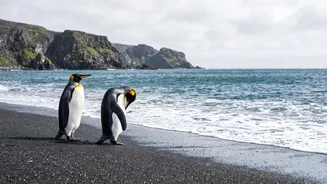
For decades, scientists considered the gentoo penguin, known for its distinctive white head patch and bright orange beak, to be a single species (Pygoscelis papua) with a few regional variations. But a groundbreaking study using genomic analysis has turned
that assumption on its head. Researchers have revealed that what we called the gentoo is actually a family of four genetically distinct species. This conclusion settles a debate that has simmered in the scientific community for more than a century. The four species are the Northern gentoo (P. papua), the Southern gentoo (P. ellsworthi), the Eastern gentoo (P. taeniata), and the newly named Southeastern gentoo (Pygoscelis kerguelensis), which is at the heart of the discovery.
A Species Hidden in Plain Sight
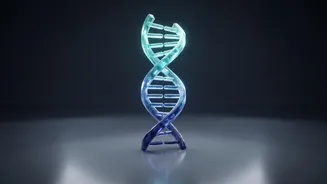
The star of this scientific shake-up is the Southeastern gentoo (P. kerguelensis), which lives on the incredibly remote Kerguelen Islands in the southern Indian Ocean. These islands are among the most isolated places on Earth. To the casual observer, this penguin looks almost identical to its relatives, sharing the classic black-and-white plumage. This is what scientists call a 'cryptic species' — one that is genetically distinct but physically very similar to another. The confirmation came from a detailed analysis of the penguins' DNA, which showed clear evolutionary divergence. While subtle differences in size and vocalisations exist, the primary evidence was hidden in their genetic code, showing they had been evolving independently for hundreds of thousands of years.
The Science of Discovery
An international team of researchers from institutions including the University of California, Berkeley, and universities in Chile, led the effort. They sequenced the entire genomes of 64 penguins from 10 different breeding colonies, covering almost the entire geographical range of the gentoo. This comprehensive data allowed them to build a new, more accurate evolutionary tree. The analysis showed that the different gentoo populations rarely, if ever, interbreed, despite being able to swim the distances between their home colonies. Geographic isolation, driven by factors like the Antarctic Polar Front—a major ocean boundary—likely caused these groups to evolve separately over the last 300,000 to 500,000 years.
Why This Matters for Conservation
Splitting one widespread species into four has significant consequences. While the gentoo penguin as a whole was listed as a species of 'Least Concern' by the IUCN, this new classification changes the picture dramatically. What was once seen as a single, large, and stable population is now understood as four smaller, more isolated, and potentially more vulnerable ones. Scientists warn that three of the four species, particularly those living on sub-Antarctic islands like the Kerguelen, are at risk. Climate change models predict that rising ocean temperatures could make their current habitats uninhabitable by 2050, with few suitable islands nearby for them to colonise.
A New Urgency for Protection
The discovery is a call to action for conservationists. Recognizing these birds as four distinct species means that regional population declines can no longer be masked by stability elsewhere. For example, the Southern gentoo (P. ellsworthi) lives on the Antarctic continent and may actually expand its range as the climate warms, but the island-dwelling species face a much more uncertain future. Conservation efforts must now be tailored to the specific threats facing each unique species in their respective homes, which are governed by different countries, including France, Australia, and New Zealand. This genetic revelation underscores the importance of protecting biodiversity, even when it’s not immediately visible to the naked eye.