





A Promising World Gets an Upgrade
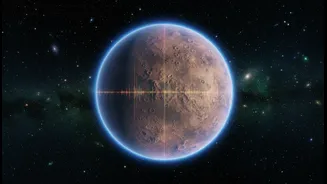
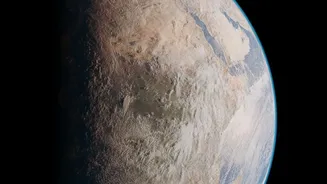
For years, astronomers have had their eyes on LHS 1140 b, a 'super-Earth' located about 48 light-years away. It’s a planet larger and more massive than our own, orbiting within its star’s habitable zone—the so-called 'Goldilocks' region where conditions
might be just right for liquid water to exist on the surface. While thousands of exoplanets have been found, those that are both rocky and in a habitable zone are rare gems. A recent study published in mid-July 2026 has delivered a stunning confirmation: LHS 1140 b has an atmosphere. This is the very first time scientists have definitively detected an atmosphere around a rocky planet in the habitable zone of another star, instantly elevating it to one of the most compelling targets in the search for life beyond Earth.
The Clue Was in the Escape
The breakthrough didn't come from directly seeing clouds or weather. Instead, it came from detecting what was leaving the planet. Using the powerful Magellan Clay telescope in Chile, an international team of astronomers observed a faint but clear signature of helium gas escaping from LHS 1140 b's upper atmosphere. This atmospheric 'leak' is a crucial piece of evidence. Just as Earth slowly loses some gases to space, the detection of escaping helium strongly implies the existence of a much larger, more substantial atmosphere below it that is being retained by the planet's gravity. The planet, which is about 5.6 times the mass of Earth, is hefty enough to hold onto a significant atmospheric blanket over billions of years. The discovery relied on a technique called transmission spectroscopy, where scientists analyze starlight after it has passed through a planet’s atmosphere, looking for the chemical fingerprints left behind by different gases.
A New Tool for Planet Hunters
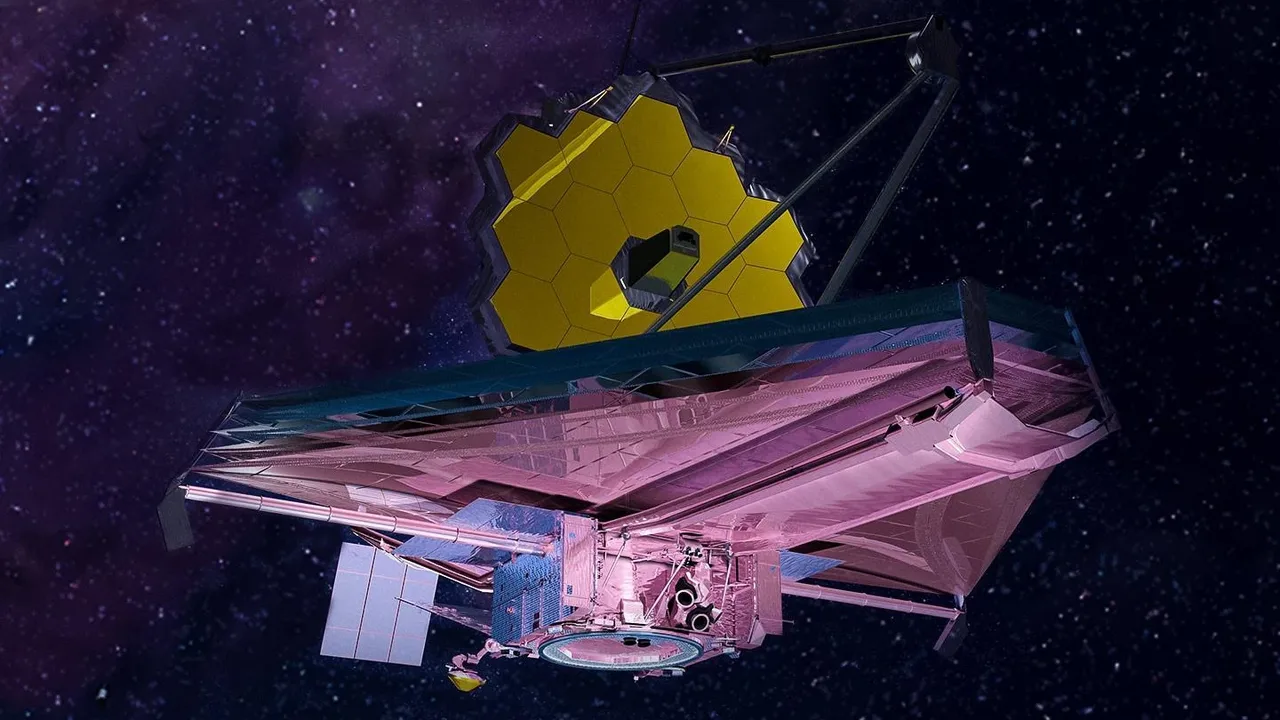
Just as significant as what was found is how it was found. The success of this study demonstrates a powerful new method for confirming atmospheres on distant worlds. Rather than relying solely on the incredibly high demand for space telescopes like the James Webb Space Telescope (JWST), this research proves that ground-based observatories can perform critical reconnaissance. By developing theoretical models that predict what signs of atmospheric escape to look for, astronomers can use ground-based spectrographs to efficiently vet promising candidates. This approach makes the hunt for habitable worlds more accessible and accelerates the pace of discovery. It allows scientists to build a priority list of targets for the JWST to investigate in greater detail, focusing its powerful capabilities on the planets most likely to yield fascinating results.
What Kind of World Is It?
The confirmation of an atmosphere fuels exciting speculation about what LHS 1140 b is actually like. Previous studies using the JWST had already ruled out the possibility of it being a gassy 'mini-Neptune', suggesting it was either a dense rocky world or, more likely, a water world containing a significant amount of H2O. With an atmosphere now confirmed, these possibilities become even more tangible. One intriguing model suggests that because the planet is likely tidally locked—with one side always facing its star—it could be an 'eyeball' planet. This would mean a world largely covered in ice, but with a large, circular ocean of liquid water existing at the warmest point directly beneath the star. The atmosphere would play a critical role in trapping heat and maintaining this potentially life-sustaining liquid ocean.
The Next Frontier: Searching for Life
This discovery is not an endpoint but a thrilling new starting line. Confirming an atmosphere is a prerequisite for habitability, but the ultimate goal is to find out what that atmosphere is made of. The quiet nature of its host star, a red dwarf that is less volatile than many of its kind, improves the odds that the planet's surface isn't constantly sterilised by radiation. The next step is for scientists to point the JWST back at LHS 1140 b for longer, more detailed observations. They will be searching for the chemical signatures of water vapour, methane, and carbon dioxide—gases that, in the right combination, could point toward biological processes. Proving the existence of life is a monumental task that will take years more of patient observation, but LHS 1140 b has now firmly established itself as one of humanity's best chances to find it.