





Craving a fuller, more defined and textured hairstyle without complex tools? Twists are a simple, effective, and protective way to transform your hair. This guide breaks down how to achieve the perfect twist-out for a stunning textured finish.
The Foundation: Prep Your Hair
A great
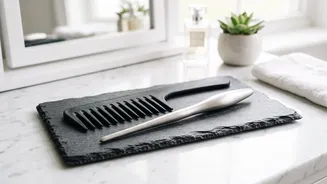
hairstyle starts with a clean and healthy base. Before you even think about twisting, it’s essential to properly prepare your hair. Begin by washing your hair with a gentle, sulphate-free shampoo to remove any product buildup, which can weigh your hair down and dull your results. Follow up with a deep conditioning treatment to infuse your strands with moisture, making them more pliable and less prone to breakage during the twisting process. The final and most critical prep step is to detangle thoroughly. Working in sections, use a wide-tooth comb and a moisturising leave-in conditioner to smooth out all knots, ensuring your twists will be neat and your final look will be free of frizz. Starting with well-moisturised, detangled hair is non-negotiable for a defined and lasting style.
Choose Your Twisting Technique
Not all twists are created equal, and the method you choose will influence your final look. The most common and beginner-friendly method is the two-strand twist. This involves taking a small section of hair, dividing it into two equal parts, and twisting them around each other from root to tip. For a looser, wavier result, you can create larger twists. For a tighter, more defined pattern, make your sections smaller. Another popular option is the flat twist. This technique is similar to a cornrow but uses only two strands. You start twisting flat against the scalp, gradually adding more hair into the two strands as you work your way down. Flat twists often create more volume at the roots but can take longer to dry. For your first time, the classic two-strand twist is a fantastic starting point.
Perfecting the Process
With your hair prepped and damp, it's time to twist. Work in manageable sections. For each section, apply a styling product that offers both moisture and hold. A good twisting butter, curl cream, or styling custard is ideal. Ensure the product is evenly distributed from root to tip for a consistent finish. When creating your two-strand twists, aim for a firm but gentle tension. Twisting too loosely can cause them to unravel, while twisting too tightly can strain your scalp. As you twist, smooth the strands with your fingers to keep them neat. Once you reach the end of a twist, give the tip a little twirl around your finger to help seal it and encourage a curl. Consistency in the size and tightness of your twists will lead to a more uniform and polished final look.
Patience and the Takedown
This is where patience becomes a virtue. Your twists must be 100% dry before you take them down. Unravelling them while still damp is a guaranteed recipe for frizz and a poorly defined style. Depending on your hair's thickness and density, this could take several hours or may even require you to leave them in overnight. Protecting your twists with a satin bonnet or scarf while you sleep is essential. Once you're certain your hair is completely dry, it's time for the reveal. Lightly coat your fingertips with a hair oil to minimise frizz during the takedown process. Start from the bottom of a twist and gently unravel it. After all the twists are undone, you can carefully separate each resulting curl into two or three smaller sections to create more volume. Avoid overstretching or fluffing too much initially to preserve definition.
Making Your Textured Look Last
You've created a beautiful, textured look—now it's time to maintain it. To preserve your style overnight, you can either loosely re-twist your hair into a few large sections or use the 'pineapple' method, which involves gathering your hair into a high, loose ponytail on top of your head. Always protect your hair with a satin bonnet or sleep on a satin pillowcase to reduce friction and frizz. In the mornings, you can use a light mist of a curl refresher or a water-based leavein conditioner to revive your curls. A little bit of oil can also be used to add shine and combat any dryness. With proper nightward care, you can often make your twistout style last for several days, with each day offering a slightly different, more voluminous look.