



The Nation’s Emergency Fuel Tank
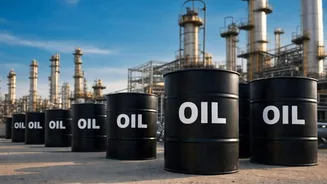
Think of Strategic Petroleum Reserves (SPRs) as the nation's ultimate emergency fuel tank. Managed by Indian Strategic Petroleum Reserves Limited (ISPRL), these are massive underground rock caverns storing crude oil. Their primary purpose is not to play
the market, but to ensure India has a critical supply of energy during a severe crisis, like a war, geopolitical conflict, or major supply chain disruption. With India importing over 88% of its crude oil, this buffer is essential for energy security. The current SPR facilities are located at Visakhapatnam, Mangaluru, and Padur, with a combined capacity of 5.33 million metric tonnes (MMT), which translates to about 9.5 days of India's import needs when full. This strategic stockpile is separate from the commercial inventories held by oil companies, which together provide a total cover of about 74 days.
A Calculated Move to Tame Prices
In late 2021, facing relentlessly rising international oil prices and the inflationary pressure it put on the domestic economy, the Indian government made a significant policy decision. For the first time, it agreed to release 5 million barrels of crude oil from its strategic reserves. This was not an isolated move but a coordinated action with other major energy-consuming nations, including the United States and Japan, aimed at cooling the super-heated global oil market. The decision was a direct response to the economic pain felt by citizens and businesses from high petrol and diesel prices, and it represented a shift in the perceived role of the SPR—from a tool for only dire national emergencies to one for managing extreme price volatility.
Short-Term Gain, Long-Term Pain?
The release of reserves, combined with cuts in excise duty, did provide a temporary cushion against price shocks. By increasing supply, the move helped to moderate fuel prices at the pump, offering relief to households and helping to tame inflation. The strategy was particularly visible during the global energy crisis following the conflict in the Strait of Hormuz, where the ability to draw on reserves prevented the need to buy oil at peak panic prices, saving the economy from a more severe shock. However, this short-term solution came with a significant long-term cost. Using reserves for price management rather than saving them for a catastrophic supply cutoff depleted the nation’s safety net. As of early 2026, India's strategic reserves were reported to be only about 64% full, leaving a substantial portion of the storage capacity empty. This reduced the emergency cover from 9.5 days to just over 5 days, a dangerously thin margin.
An Emptier Buffer in a Volatile World
A partially empty reserve tank leaves India more vulnerable. With geopolitical tensions remaining high, especially in West Asia—a primary source of India's oil—the risk of a supply disruption is ever-present. A smaller buffer means India has less capacity to absorb a sudden shock, forcing it to buy oil on the spot market at inflated prices during a crisis, which could trigger severe economic consequences. Analysts point out that India's reserve levels are already well below the 90-day import coverage recommended by the International Energy Agency (IEA) for its member countries. The recent crises have served as a stark reminder of this vulnerability, prompting calls from experts, including former Planning Commission Deputy Chairman Montek Singh Ahluwalia, for India to significantly expand its strategic reserves.
Refilling the Reserves: The Road Ahead
The government is now focused on bolstering its energy security. There are plans to not only refill the existing caverns but also to expand capacity under Phase II, with new facilities planned at Chandikhol in Odisha and an expansion at Padur in Karnataka. These additions would add another 6.5 MMT of storage. Recent government directives have also tasked state-owned companies like ONGC with building new SPR facilities to accelerate this expansion. The long-term goal is to build a reserve capable of meeting up to a month's demand. The key challenge will be balancing the cost of buying millions of barrels of oil to refill and expand the reserves against other fiscal priorities. The strategy is clear: rebuild the buffer to ensure that the next time a global crisis hits, India's economic engine has the fuel it needs to keep running.