






Beyond the Cigarette Analogy
The 'cigarettes per day' calculation is a simple way to quantify the danger of one specific pollutant: PM2.5, or fine particulate matter. It's an effective soundbite, but it's misleading. Cigarette smoke is a specific cocktail of toxins inhaled directly.
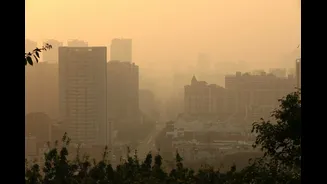
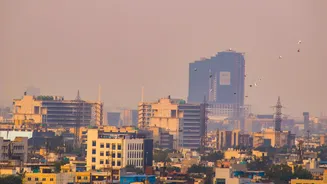
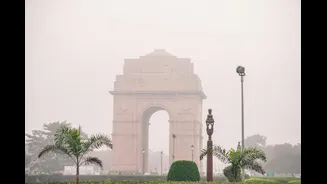
Delhi's smog, however, is a complex, ever-changing chemical soup containing a much wider array of poisons that attack the body in different and often more insidious ways. As of late October 2026, Delhi's Air Quality Index (AQI) has once again entered the 'poor' category, with levels climbing to 244 on October 21st, prompting authorities to enact pollution control measures. Understanding what is in that air is critical.
The Invisible Invader: PM2.5
The primary villain in this story is PM2.5. These are microscopic particles, less than 2.5 micrometres in diameter, that are inhaled deep into the lungs. Unlike larger particles that get trapped in the upper airways, PM2.5 is so fine it can pass through the lung lining and enter your bloodstream. From there, it travels like a Trojan horse to every major organ in your body, including your heart, brain, and kidneys. This is the fundamental difference: while smoking primarily targets the lungs, PM2.5 launches a full-body assault.
A Crisis for the Heart and Brain
The most severe risks of air pollution, beyond respiratory issues like asthma and bronchitis, are to the cardiovascular system. Once in the blood, PM2.5 causes inflammation, which can lead to the hardening of arteries (atherosclerosis), increase blood pressure, and raise the risk of heart attacks and strokes. Emerging research also points to devastating neurological effects. These fine particles can cross the blood-brain barrier, causing inflammation in the brain. This has been linked to cognitive decline, memory loss, and an increased risk of neurodegenerative diseases like Alzheimer's and Parkinson's. This is a threat that the smoking analogy completely fails to capture.
A Toxic Chemical Cocktail
Delhi's smog is far more than just particulate matter. It is a toxic blend of numerous harmful gases and chemicals. Nitrogen dioxide (NO2), primarily from vehicle exhaust, irritates the lungs and makes people more susceptible to respiratory infections. Sulphur dioxide (SO2), from industrial fuel combustion, also harms the respiratory system and contributes to the formation of more particulate matter. Ground-level ozone, formed when pollutants react with sunlight, can trigger chest pain, coughing, and throat irritation, effectively giving your lungs a 'sunburn'. Recent studies have also highlighted the role of ammonium sulfate, a secondary pollutant that forms in the air and can constitute nearly a third of PM2.5, worsening lung and heart conditions.
A Systemic, Not Singular, Threat
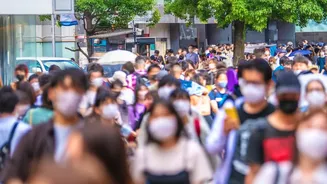
The danger of Delhi's air, therefore, is not just equivalent to the act of smoking. It is a multi-pronged attack on the body's core systems. The constant exposure to this mixture of particles and gases places the body under immense stress. For children, the elderly, and those with pre-existing conditions, the risk is acute. But even for healthy individuals, long-term exposure shortens life expectancy and significantly increases the risk of chronic disease. Unlike a smoker who chooses to light up, residents of Delhi have no choice but to inhale this hazardous mixture with every breath they take, over 20,000 times a day.