









What Are These Gateway Sites?
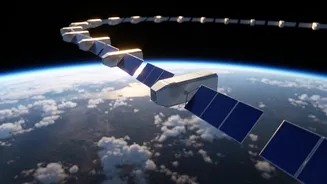
Think of gateway sites, or ground stations, as the essential bridge between Starlink's satellites in low-Earth orbit and the internet on the ground. When you send a request from your device, it travels to a satellite, which then relays it down to one
of these gateways. The gateway, which is connected to the global terrestrial fibre optic network, fetches the data and sends it back through the satellite to your terminal. Starlink has confirmed the construction of twenty such sites across India, equipped with hundreds of individual antennas. This is a massive infrastructure investment and a crucial piece of the puzzle, demonstrating that the company is operationally ready to launch its services. A SpaceX executive stated that the company has tailored its operations specifically for India, including establishing controls to ensure Indian user data remains within the country, a key regulatory requirement.
The Long Road to Approval
Building the ground network is a sign of serious commitment, but it doesn't mean Starlink can flip the switch tomorrow. The journey through India's regulatory landscape has been long and complex. The company first began seeking permission in 2022 and even had to refund pre-bookings made in 2021 before it had a licence. Starlink secured its vital Global Mobile Personal Communication by Satellite (GMPCS) license from the Department of Telecommunications (DoT) in June 2025, followed by authorisation from the Indian National Space Promotion and Authorisation Centre (IN-SPACe) in July 2025. However, several critical approvals are still pending, including the final allocation of spectrum and, most importantly, security clearances for its gateway sites. A SpaceX vice president recently noted at the India Mobile Congress 2026 that Starlink is 'ready to serve India, once India is ready', highlighting that the ball is now in the government's court.
A Crowded Sky: The Competition
Starlink is not entering an empty market. It faces stiff competition from two other major players who also have licenses: Bharti-backed Eutelsat OneWeb and Reliance's Jio Satellite Communications, a joint venture with SES. In fact, OneWeb was the first to get IN-SPACe approval back in November 2023 and has its entire global satellite constellation in orbit. Jio, leveraging its immense market presence, plans to use its JioSpaceFiber service to connect areas that traditional networks can't reach. All three companies are in a similar holding pattern, waiting for the final government clearances to begin commercial operations. Starlink has reportedly signed Memorandums of Understanding (MoUs) with both Jio and Airtel, suggesting a complex dynamic of both competition and potential collaboration in reaching India's vast and diverse market.
What This Means for Digital India
The arrival of high-speed satellite internet, whether from Starlink, OneWeb, or Jio, promises to be a game-changer for India's digital ambitions. The primary focus for these services is not the well-connected urban centres, but the rural and remote regions where laying fibre optic cables is economically and logistically unfeasible. This could revolutionise connectivity for villages, schools, and healthcare facilities in underserved areas. Starlink has already signed letters of intent with states like Maharashtra, Gujarat, and Meghalaya to explore how its service could best serve their communities. By offering connectivity 'within minutes, not years', as one executive put it, satellite internet aligns perfectly with the government's vision of 100% connectivity, potentially bridging the last-mile gap and bringing millions of Indians online for the first time.