







A Meal Born From Industrial Hustle
The story of pav bhaji begins in the 1850s and 60s, not in a grand kitchen, but out of necessity for Mumbai’s burgeoning class of textile mill workers. During this period, a boom in the cotton trade, partly fueled by the remote American Civil War disrupting
cotton supply chains, meant Mumbai’s mills were operating around the clock. Workers had short lunch breaks and needed a meal that was hot, cheap, quick, and nutritious enough to fuel them through strenuous shifts. Local street vendors rose to the occasion, creating a simple, fast-food solution. They mashed together easily available vegetables—often potatoes, onions, and tomatoes—with a blend of spices, creating a thick, flavourful curry called 'bhaji.'
The Portuguese Pav Connection
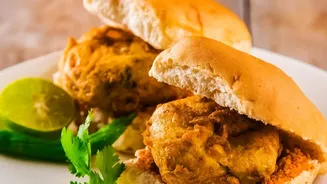
The bhaji needed a companion, something to scoop it up with that was quicker and more convenient than traditional roti or rice. The answer was the 'pav', a soft, fluffy bread roll. The name 'pav' is derived from the Portuguese word 'pão', meaning bread, introduced to India’s western coast by Portuguese traders and colonists in the 16th century. This pairing of a uniquely Indian vegetable mash with a European-style bread roll perfectly suited the needs of a city always on the move, allowing workers to eat a satisfying meal quickly, often while standing. This fusion was the birth of pav bhaji as we know it.
From Worker's Lunch to City's Icon
For a long time, pav bhaji remained the humble food of mill workers and traders who worked late near the cotton exchange. However, its undeniable appeal—affordable, delicious, and filling—could not be contained. By the mid-20th century, it had migrated from the immediate vicinity of the mills to street carts and small eateries across the city. Restaurants dedicated to the dish began to appear, with establishments like Sardar Pav Bhaji, founded in the 1960s, becoming legendary landmarks. The recipe also evolved. What started as a simple mash of a few vegetables grew more complex, incorporating cauliflower, peas, and bell peppers, and was enriched with generous amounts of butter and a signature 'pav bhaji masala' spice blend.
A Symbol of Mumbai's Melting Pot
Today, pav bhaji is inseparable from Mumbai’s identity. It embodies the city’s fast-paced, industrious spirit—a dish that can be served in minutes and eaten just as fast. More importantly, it is a great equalizer. From business tycoons to students, people from all walks of life gather at the same street-side stalls to enjoy a plate. The dish reflects Mumbai's melting-pot culture, where ingredients and influences from different communities have fused to create something new. Its many variations, from spicy Kolhapuri versions to Jain preparations without onion and garlic, showcase its adaptability, mirroring the city's own diversity.
The Enduring Legacy of a Humble Dish
While you can now find pav bhaji in five-star hotels and Indian restaurants across the globe, its soul remains on the streets of Mumbai. It is a taste of the city’s history—a reminder of the sweat and toil of the mill workers who built modern Mumbai. The dish is a culinary spectacle, with vendors skillfully preparing the bhaji on enormous flat griddles (tawas), the rhythmic sound of the masher becoming part of the city’s soundscape. Topped with a dollop of butter, chopped raw onions, a sprig of coriander, and a squeeze of lime, it’s a complete sensory experience. It is more than a recipe; it's a living piece of history served hot on a plate.