
The Invisible Jolt in the Sky
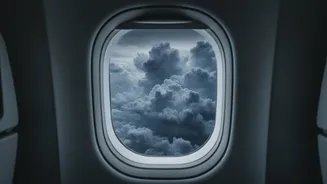
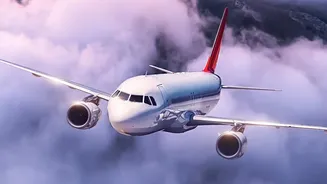
On August 4, an Air India Airbus A320neo flying from Phuket to Delhi encountered severe turbulence over India, resulting in an abrupt altitude change and injuries to several passengers and crew members. The incident happened in what is known as Clear-Air
Turbulence (CAT), which is particularly unnerving because it occurs in cloudless skies, offering no visual warning to pilots. Unlike the turbulence associated with thunderstorms, CAT is invisible to conventional weather radar, which works by detecting moisture droplets in clouds. It's typically caused by the meeting of air masses moving at vastly different speeds, often near powerful jet streams. The Directorate General of Civil Aviation (DGCA) immediately launched an investigation, securing the aircraft's two most critical pieces of evidence: the flight recorders.
Unlocking the 'Black Box'
Contrary to their name, these 'black boxes' are actually painted bright orange to aid recovery after an incident. There are two separate devices: the Cockpit Voice Recorder (CVR) and the Flight Data Recorder (FDR). The CVR captures all sounds in the cockpit, including pilot conversations, alarms, and engine noises, providing a timeline of events from the crew's perspective. The FDR is the real star of a technical investigation. This device records hundreds of parameters multiple times per second, creating a precise, second-by-second digital reconstruction of the flight. For the Air India incident, investigators at the DGCA will download this data to analyse exactly what the aircraft experienced. They can see the aircraft's altitude, airspeed, heading, and the exact position of flight controls like the ailerons and rudder. This data allows them to recreate the flight path and understand how both the aircraft and its pilots responded to the turbulent conditions.
Decoding the G-Forces
One of the most critical data points in a turbulence investigation is vertical acceleration, measured in G-forces. At rest on the ground or in smooth flight, we experience 1G—the normal force of gravity. Severe turbulence can cause rapid and dramatic changes in this force. A positive G-force (+G) pushes you down into your seat, making you feel heavier. A negative G-force (-G) does the opposite, creating a sensation of weightlessness or even lifting you out of your seat if you're not buckled up. It is this rapid shift between positive and negative Gs that causes injuries, as unsecured passengers can be thrown against the cabin ceiling. The FDR provides precise readings of these forces. For instance, data might show the G-force rapidly swinging from +1.5G to -1.0G in less than a second. This tells investigators the exact severity of the jolt and explains how injuries occurred, reinforcing why seatbelt discipline is so critical even when the sign is off.
Pilot and Autopilot Response
Flight data also reveals the crucial interplay between the human pilots and the aircraft's automated systems. In many modern aircraft, the autopilot is designed to handle minor turbulence smoothly. However, in severe encounters, it may disconnect, or the pilots may choose to disengage it to take manual control. The FDR logs every one of these actions. Investigators can see if the autopilot commanded a specific descent or if the pilots made manual control inputs to stabilize the plane. This isn't about assigning blame; it's about understanding the sequence of events. It helps determine if the aircraft behaved as expected, if pilot actions were in line with their training, and if any procedures need to be updated. The data from the Air India flight will allow the DGCA to build a complete picture of the response inside the cockpit.
Building a Bigger Picture
The black boxes are central, but they aren't the only source of information. Investigators will correlate the flight data with other evidence, including weather satellite imagery, reports from other pilots in the area (known as PIREPs), and air traffic control logs. This helps to map the exact atmospheric conditions that the aircraft flew into. Publicly available flight tracking data, for example, showed the Air India flight deviating from its cruising altitude, though the full story requires the higher-resolution data from the FDR. By combining all these sources, investigators can not only determine the cause of a single incident but also contribute to a global body of knowledge that improves turbulence forecasting and avoidance strategies for all airlines.