






A Flood of New Findings
OpenAI recently announced it has published a massive collection of mathematical results generated by one of its internal, unreleased AI models. The company released 372 distinct findings, some of which make progress on famous unsolved problems, including
the Riemann hypothesis, while others offer improvements to major computer algorithms. Rather than submitting to traditional academic journals, OpenAI has posted the work in a public GitHub repository, inviting mathematicians and researchers worldwide to scrutinize, review, and verify the AI's work. This move follows a period of friction between OpenAI and some mathematicians, who have expressed concern over the use of private, proprietary models to tackle major open problems in their field.
The Quest for Formal Verification
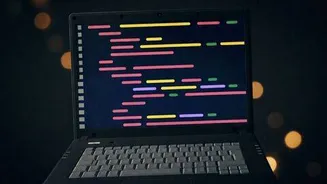
Unlike a creative essay or a chat conversation, a mathematical proof must be perfect. A single logical flaw can invalidate the entire result. This is where AI often struggles; large language models are designed to produce plausible-sounding text, but they can 'hallucinate' or make subtle errors that are unacceptable in mathematics. To address this, OpenAI is leaning on 'formal verification'. Many of the released proofs come with formalizations in Lean, a special programming language that allows a mathematical argument to be checked by a computer with absolute certainty. This process turns a human-readable proof into a machine-checkable one, providing a level of rigour that manual peer review alone might struggle to achieve, especially at this scale.
Why Crowdsource the Review?
The decision to open these results to the public serves several purposes. Firstly, the sheer volume of AI-generated material would overwhelm the capacity of any internal team or traditional journal. By releasing the work on GitHub, OpenAI is crowdsourcing the immense task of verification to the global mathematics community. Secondly, it's an act of transparency designed to build trust. After recent controversies, including a claimed solution to the Navier-Stokes problem that drew criticism, this open approach allows experts to see the methodology and check the work for themselves. The company has shared details on its methods, summaries of the model's reasoning, and even estimates of the computing power used for each result, which it says averaged around three hours of ChatGPT Pro usage per solution.
A New Partner for Mathematicians?
The long-term vision behind this project is to develop AI into a reliable partner for scientists and mathematicians. While some experts are astounded by the AI's capabilities, others remain cautious, arguing that without access to the model itself, the results are difficult to replicate and verify independently. There's also a philosophical debate unfolding. A correct proof is one thing, but human understanding is another. Experts like Fields Medalist Terence Tao have noted that even if an AI proof is correct, it's the job of humans to understand why it works and explain its insights to the community. The goal is not to replace human mathematicians, but to augment their abilities, automating tedious work and potentially uncovering new lines of inquiry.
Beyond Math: The Broader Implications
Successfully demonstrating robust reasoning in mathematics would be a landmark achievement for AI, with implications reaching far beyond the field. Mathematics is a premier testbed for general reasoning capabilities. If an AI can be trusted to perform flawlessly in such a logically demanding environment, it opens the door to its use in other high-stakes scientific domains like physics, drug discovery, and complex engineering. These fields rely on precise models and verifiable results. This release, therefore, is more than just an experiment in mathematics; it's a critical step in determining whether AI can evolve from a versatile assistant into a trustworthy tool for accelerating human knowledge and scientific discovery.