





The Traditional Model: Use Once and Discard
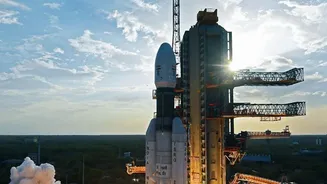
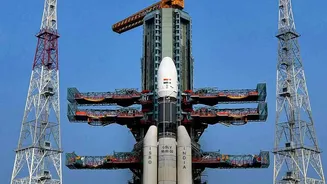
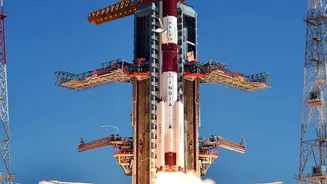
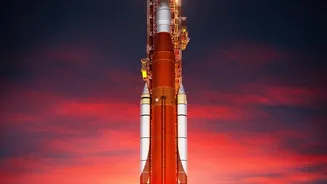
For most of spaceflight history, rockets were expendable. Much like a disposable paper cup, a traditional launch vehicle was built for a single mission. These rockets typically consist of multiple stages, each with its own engines and fuel tanks. As the
rocket ascends, a lower stage exhausts its fuel, detaches, and falls back to Earth, usually into the ocean. The next stage ignites, continuing the journey until it too is jettisoned. This process continues until only the final payload, such as a satellite or crew capsule, reaches its orbital destination. The primary drawback of this approach is immense cost. The vast majority of the expense — often 70-80% — is tied to manufacturing the complex hardware, including powerful engines and sophisticated electronics, all of which is lost after a few minutes of use. Imagine building a brand-new commercial airliner for every single flight and you get a sense of the economics.
The Reusable Revolution: How to Land a Rocket
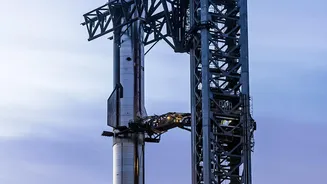
Reusable rockets, pioneered most successfully by SpaceX with its Falcon 9, are designed to bring their most expensive components back to Earth for another mission. The key innovation is the recovery of the first stage, or booster, which houses the majority of the powerful and costly engines. After separating from the upper stage, the booster performs a series of complex maneuvers. It flips around, fires some of its engines in a 'boostback burn' to reverse course, and uses steerable 'grid fins' to guide itself through the atmosphere. Finally, it executes a final engine burn to slow down for a gentle, vertical landing on either a ground pad or an autonomous droneship in the ocean. This entire process requires additional fuel, sophisticated flight software, and hardware like landing legs, which slightly reduces the rocket's total payload capacity compared to an expendable version.
The Economic Equation: A New Era for Space
The primary difference and the driving force behind reusability is economics. By reusing the first stage booster, companies can dramatically lower the cost of accessing space. Launching an expendable rocket can cost anywhere from $110 million to over $200 million. A reusable rocket launch, by comparison, might cost around $67 million. Reusability allows companies to refly the most expensive hardware, meaning the main cost for a subsequent launch is fuel and refurbishment, not building an entirely new vehicle. Refurbishing a Falcon 9 booster, for instance, costs only about 10% of what it takes to build a new one. This cost reduction of up to 70% per launch has fundamentally altered the business of space. It has made insurance premiums cheaper and enabled a much higher launch frequency, as companies are not constantly waiting for new rockets to be built from scratch.
More Than Just Money: Turnaround and Sustainability
Beyond cost, reusability offers other significant advantages. Turnaround time is one. While a traditional rocket takes months or years to build, a reusable booster can be recovered, inspected, refurbished, and launched again in a matter of weeks. This has enabled an unprecedented launch cadence, supporting ambitious projects like satellite mega-constellations. Environmentally, the picture is also different. Traditional rockets create waste by design, leaving spent stages in the ocean or to burn up in the atmosphere. Reusable systems drastically reduce this industrial waste. While rocket launches still have an environmental footprint due to emissions, reusing major components lessens the overall impact associated with manufacturing, from raw material extraction to assembly. However, the lower cost and higher launch frequency enabled by reusability also raise new concerns about orbital congestion and the overall atmospheric impact of increased space traffic.