







A River of Iron Runs in Reverse
Imagine a massive, turbulent ocean of liquid iron, hotter than the surface of the sun, churning 3,000 kilometres beneath the ground. This is Earth’s outer core, and its constant motion generates the magnetic field that protects our planet. For decades,
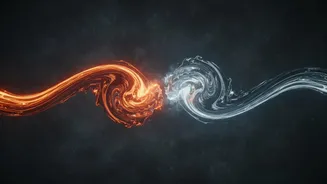
scientists observed a large portion of this molten river, particularly under the Pacific Ocean, flowing steadily westward. But recent analysis has revealed a startling change. Around 2010, this vast stream of liquid metal didn't just slow down; it reversed course, beginning to flow rapidly eastward. This sudden change has challenged long-held assumptions about the deep Earth, suggesting its inner workings are far more dynamic and unpredictable than previously believed.
How Satellites See Into the Core
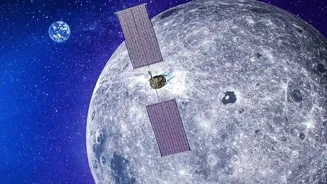
Observing the core directly is impossible. The immense pressure and temperature would destroy any probe. So how do we know what’s happening down there? The answer lies in space. A trio of satellites from the European Space Agency, known as the Swarm mission, orbits our planet with a singular purpose: to measure Earth's magnetic field with extraordinary precision. The flow of molten iron in the core generates electrical currents, which in turn create the magnetic field. When the flow changes, it causes tiny, almost imperceptible wobbles and fluctuations in the magnetic field at the surface. By meticulously tracking these magnetic variations over many years, scientists can create models that infer the speed and direction of the molten iron deep below, essentially giving us an indirect view of the core's churning activity.
What Does 'Reversal' Actually Mean?
The word “reversal” might sound alarming, perhaps conjuring images of the planet’s magnetic poles flipping. However, this event is not a global magnetic pole reversal. Instead, it’s a localised change in a specific stream of core material under the Pacific. Think of it less like the entire planet changing direction and more like a powerful ocean current, such as the Gulf Stream, suddenly deciding to flow backwards. While not a sign of impending doom, it is a profoundly significant event for geophysicists. The abruptness of the change, occurring over just a few years, suggests that rapid, almost turbulent events can happen on a massive scale within the core. Scientists are still working to understand the exact cause, which remains a mystery.
Why This Deep-Earth Drama Matters
This isn't just an academic curiosity. The core’s behaviour has direct consequences for life on the surface. The magnetic field it generates acts as a vital shield, deflecting harmful charged particles from the sun known as solar wind. Without this protective bubble, our atmosphere could be stripped away, and our technology would be vulnerable. Changes in the magnetic field can impact everything from satellite navigation systems and spacecraft operations to the electrical power grid. This core flow reversal has been linked to what scientists call a “geomagnetic jerk”—a sudden acceleration in the magnetic field’s rate of change. Understanding these deep-seated processes is therefore crucial for accurately forecasting space weather and ensuring the resilience of our technological infrastructure.
An Evolving Mystery
The story doesn’t end with the 2010 reversal. More recent satellite data suggests that the new eastward flow has already begun to weaken since 2020. This raises new questions: Was this reversal a temporary fluctuation, part of a long, oscillating cycle, or the beginning of a new, stable pattern of flow? Some researchers have even hypothesised that these changes in the outer core might be linked to shifts in the behaviour of the solid inner core. What is certain is that our ability to monitor the planet's deepest interior has entered a new era. With every orbit, satellites like Swarm provide more data, slowly pulling back the curtain on the turbulent and mysterious world that churns far beneath our feet.