






More Than Just a Walk With Poles
Originally developed in Finland as a summer training method for cross-country skiers, Nordic walking is a specific fitness technique, not just hiking with poles. It involves using specially designed poles to propel yourself forward, actively engaging
your upper body with every step. Unlike trekking poles, which are primarily used for support on uneven terrain, Nordic poles are used to intensify the workout. The result is that you engage up to 90% of your body's muscles, compared to only about 50% with regular walking, turning a simple walk into a comprehensive exercise session.
The Full-Body Benefits
The advantages of incorporating poles are significant. Research shows Nordic walking can increase calorie burn by 20% to 45% or more compared to regular walking, without necessarily feeling like you're working harder. By distributing the effort across your entire body, it reduces stress on your lower-body joints like knees and hips, making it an excellent low-impact option. The poles also provide additional points of contact with the ground, which improves stability and balance, a major benefit for older adults or those with coordination concerns. Studies have also linked it to reduced chronic pain, better posture, and improved cardiovascular fitness.
Mastering the Basic Technique
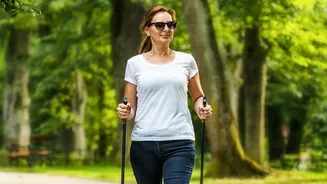
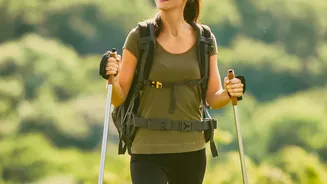
Getting the technique right is key to unlocking the full benefits. It starts with good posture: walk tall with your shoulders relaxed and look forward, not down. The core movement is a natural, diagonal stride where your opposite arm and leg move forward together. The poles should be planted behind you at an angle, not straight down in front. As you step forward, you push off with the pole to propel yourself. Your arm should swing from the shoulder, and as it extends backward, you open your hand to release the grip slightly, letting the special strap system do its job. It should feel like a smooth, rhythmic motion.
Choosing the Right Equipment
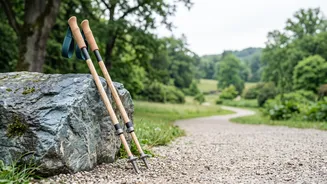
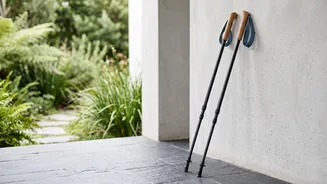
While it may be tempting to grab any old trekking poles, proper Nordic walking poles are different. They are typically lighter and have a unique strap or glove-like system that allows you to perform the push-and-release technique correctly. Poles come in fixed-length and adjustable varieties. Adjustable poles are versatile, especially if you're sharing them or want to fine-tune the length. For material, carbon poles are lighter and better at absorbing vibration, while aluminum is more robust. To find the right length, a common formula is to multiply your height in centimetres by 0.66 or 0.68. Alternatively, when you hold the pole, your elbow should be at roughly a 90-degree angle.
Scaling for Your Fitness and Balance
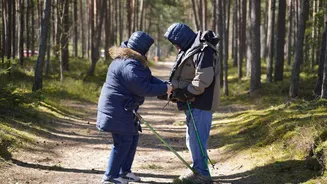
Nordic walking is highly adaptable. If you are a beginner or have concerns about balance, start on flat, even surfaces. Focus on mastering the technique with shorter strides and a gentle arm swing before trying to build speed. Shorter walking intervals with rest breaks can help build endurance safely. For those with significant balance issues, the poles offer crucial stability, reducing the fear and risk of falling. For more advanced individuals looking for a challenge, increasing the intensity is simple. You can walk faster, lengthen your stride, or incorporate hills into your route. A stronger push-off with the poles will further engage your muscles and increase your heart rate for a more intense cardiovascular workout.