





An Accidental Find
It began not with a bang, but with a routine scan of data. Robert Wagner, an image-processing specialist working with NASA's Lunar Reconnaissance Orbiter (LRO) mission, was performing a standard data-quality check in October 2025. His eyes caught something
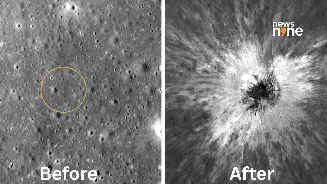
unusual: a large, bright spot surrounded by a dark halo, a tell-tale sign that the surface had been recently disturbed. As he put it, he “just stopped, dropped everything, and started looking into what that spot was.” By meticulously comparing new images from the LRO with older ones of the same area, Wagner confirmed his suspicion. It was a new crater, but not just any crater. This was the one scientists had been waiting for.
Introducing McGetchin Crater
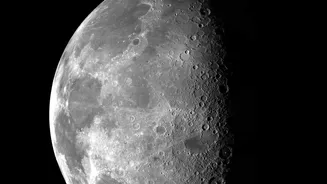
The feature was officially named McGetchin crater, in honour of the pioneering Apollo-era lunar scientist Tom McGetchin. The scale of the crater is staggering. It measures about 728 feet (222 meters) across and 141 feet (43 meters) deep. To put that in perspective, it’s wider than two football fields laid end-to-end and deep enough to swallow three school buses stacked vertically. The impact was caused by an object, likely a comet or asteroid fragment the size of a three- to six-story building, that slammed into the Moon's eastern edge. The resulting feature is the largest newly formed impact crater ever identified by scientists anywhere in our solar system.
Hiding in Plain Sight
How did something so significant go unnoticed? The impact itself, which occurred sometime between April and May of 2024, escaped real-time detection by telescopes on Earth and in space. The Moon is constantly being bombarded by smaller objects, but an event of this magnitude is exceptionally rare. The discovery was only possible thanks to the long-running LRO mission, which has been mapping the lunar surface for over 17 years. With a vast archive of 'before' images, scientists could pinpoint exactly where and when the surface changed. The initial wide-angle images showing the change weren't flagged in the flood of data until more than a year after the impact, in August 2025, with more detailed observations confirming the discovery in early 2026.
A 'Once-in-a-Century' Event
Scientists estimate that an impact capable of creating a crater of this size happens on the Moon only about once every century, or perhaps even less frequently. This makes the discovery of McGetchin a 'once-in-a-lifetime' opportunity to study the immediate aftermath of a major impact. Fresh craters provide an unfiltered look at the cratering process before the harsh environment of space and constant micrometeorite bombardment begin to erode the features. It’s like getting a pristine geological laboratory delivered right to our celestial doorstep, offering invaluable insights that older, degraded craters cannot.
More Than Just a Hole
The effects of the impact extend far beyond the crater's rim. In a separate study, scientists using a thermal instrument on the LRO found a 4-mile-wide (about 7-kilometer) 'cold spot' surrounding McGetchin. At night, this area is about 16 degrees Fahrenheit cooler than its surroundings. The reason is that the impact's shockwave 'fluffed up' the lunar soil, or regolith, making it less dense and therefore less able to retain heat, a process one scientist likened to gardening. This was a remarkable finding, showing how a single impact can physically alter a vast area of the lunar surface, a crucial piece of information for designing future lunar rovers and infrastructure.
Why This Matters for Future Missions
The discovery is more than just an academic curiosity; it has direct implications for the future of human space exploration, including NASA's Artemis program, which aims to establish a long-term presence on the Moon. Understanding the frequency and effects of major impacts is critical for ensuring the safety of astronauts and the durability of lunar bases. Furthermore, studying how the impact churned up soil from below the surface helps scientists better understand the composition and properties of the ground on which future habitats will be built. The event also serves as a stark reminder that the lunar environment is far from static and that any long-term outpost must be designed to withstand its dynamic nature.